Apple’s WWDC26 keynote focused on AI features spanning iPhone, Mac, and Vision Pro, a revamped Siri, and new parental controls for child safety.
Apple’s Worldwide Developers Conference 2026 opened with a keynote that placed artificial intelligence and child safety at the heart of the company’s software roadmap. The event showcased AI capabilities designed to work across iOS, iPadOS, macOS, and the Vision Pro headset, alongside a significantly upgraded Siri and new tools giving parents greater control over how their children use Apple devices.
AI That Works Across the Entire Apple Ecosystem
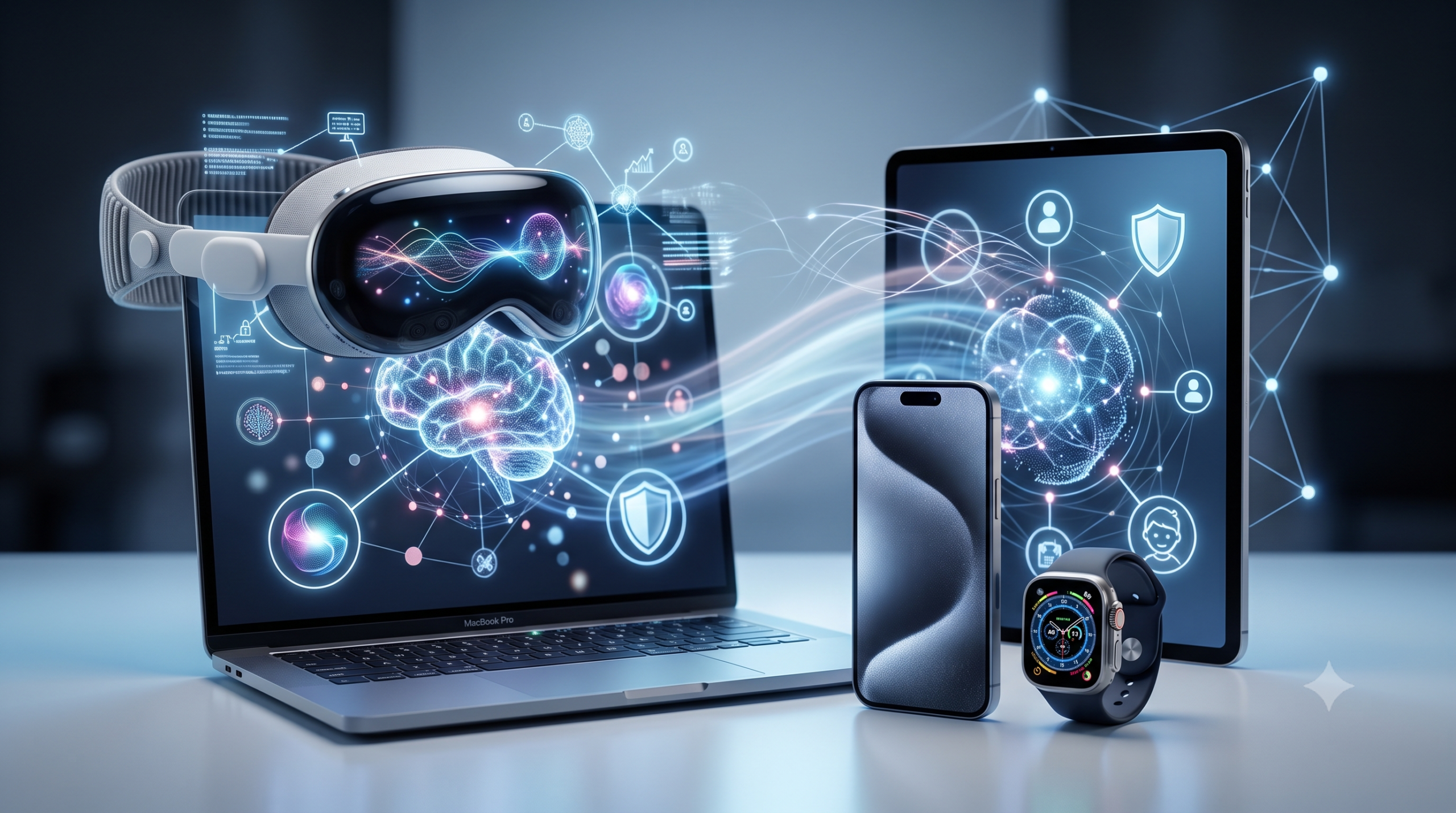
The defining theme of WWDC26 was not any single AI feature but rather how deeply Apple has embedded AI across its entire product line. Unlike competitors where AI tools often operate in isolation, Apple demonstrated experiences that carry across devices — a conversation started on an iPhone can continue on a Mac and extend into the Vision Pro without interruption.
Jim McGregor, founder and principal analyst at Tirias Research, highlighted this as Apple’s key advantage over Android and other platforms. He noted that achieving the same continuity on a competing platform would require building a custom AI agent, something the average user is not positioned to do.
Rob Enderle, president and principal analyst at the Enderle Group, described the integration story as genuinely powerful. Because Apple controls both the hardware and software across its product range, it can deliver a level of cross-device AI consistency that fragmented ecosystems simply cannot match.
Google Gemini Powers Much of Apple Intelligence
To expand its AI capabilities, Apple has partnered with Google, bringing the Gemini large language model into the Apple Intelligence framework. Analysts noted that the majority of what Apple demonstrated at the keynote was Gemini-powered, which represents an unusual move for a company with a strong tradition of building its own core technologies.
Enderle described it as an uncharacteristic but understandable step, calling it a stopgap measure for a vertically integrated company that likely finds it uncomfortable to rely on a third-party AI platform. Apple is also working with Anthropic’s Claude and OpenAI’s ChatGPT, meaning it is not exclusively tied to Gemini — but Gemini was the dominant AI partner visible at the keynote.
Importantly, the Gemini models used within Apple Intelligence are not the same versions available to the general public, a distinction that was not initially clear when the partnership was announced in January 2026.
A New Siri Built for Real Conversations
The upgraded Siri was one of the most discussed announcements at WWDC26. The new version brings together several meaningful improvements:
- Personal context understanding — Siri can draw on a user’s history and preferences across apps
- On-screen awareness — Siri can see and interpret what is currently displayed on the device
- Image understanding — point the iPhone at an object, a bill, a product, or a screen to get instant help
- Application actions — Siri can take actions across apps without the user switching between them
- Conversation memory — prior Siri conversations are accessible across devices
Mark Vena, president and principal analyst at SmartTech Research, noted that Siri was the feature Apple absolutely had to deliver on. After drawing criticism for overpromising and underdelivering on AI in previous cycles, Apple appears to have used WWDC26 to close that gap with a version of Siri that functions more like a persistent assistant than a one-off command tool.
Analysts also praised Apple’s decision to show realistic latency during demos rather than editing it out — a choice that signals the company is more focused on setting honest expectations than on a polished presentation.
One area where some analysts still see room for improvement is Siri’s tendency to return text-based responses rather than audio. McGregor acknowledged the progress but said he would prefer a more conversational audio experience.
Catching Up on Earlier AI Promises
WWDC26 also represents a moment of course correction for Apple. Several analysts pointed out that Apple made significant promises about Siri and Apple Intelligence at previous events, then fell short of those expectations in execution.
Anshel Sag, senior analyst at Moor Insights and Strategy, said Apple is now catching up with those earlier commitments. He singled out the use of spatial technologies in the Vision Pro to enhance photo experiences as a standout feature — one that gives users the ability to reframe images after the fact in ways that feel practically useful rather than gimmicky.
Ross Rubin, principal analyst at Reticle Research, noted that WWDC26 marks a shift from Apple’s historical approach of treating each operating system separately. For the first time, the company appears to be presenting AI capabilities as a unified story across the entire product range rather than OS-by-OS additions.
New Child Safety and Parental Control Tools
Beyond AI, Apple used WWDC26 to announce expanded parental control features designed to give families more granular oversight of how children use Apple devices. The new tools allow parents to control:
- What content children can access
- Who their children can communicate with
- When and for how long specific apps or features can be used
- Where certain features are accessible
Apple also launched a dedicated website explaining all safety features and guiding parents through setup.
Analysts welcomed the additions but raised a practical concern: parents already have access to controls they are not fully using. Enderle noted that expanding the options available is a positive step, but the real challenge lies in encouraging adoption. McGregor agreed that the right algorithms and implementation will be critical, describing child safety controls as genuinely difficult to get right and still an area in active development across the industry.
What WWDC26 Means for Apple’s Position in AI
Apple’s 2026 developer conference makes it clear that the company is serious about competing in the AI era — not by chasing the same benchmarks as rivals, but by leveraging the one advantage it has always held: complete control over its hardware and software stack. The result is an AI experience that is more deeply woven into daily use than anything available on a platform where hardware and software come from different companies.
Whether the Gemini partnership evolves, fades, or is replaced by Apple’s own models in future generations remains to be seen. For now, WWDC26 signals that Apple is no longer playing catch-up — it is making a clear case for why its approach to AI is distinct, and why that distinction matters to users.
Frequently Asked Questions
Apple Intelligence is integrated across all of Apple's hardware and software, allowing a continuous AI experience from iPhone to Mac to Vision Pro. On Android, achieving the same level of cross-device and cross-app AI continuity would require building a custom agent, which is not practical for most users.
No. While Google Gemini powers much of what Apple demonstrated at WWDC26, Apple is also working with Anthropic's Claude and OpenAI's ChatGPT. The Gemini models used within Apple Intelligence are also distinct from the publicly available versions.
Apple introduced expanded parental controls allowing parents to manage their children's content access, communication contacts, app usage times, and feature availability. A new dedicated website was also launched to help families understand and activate these safety tools.