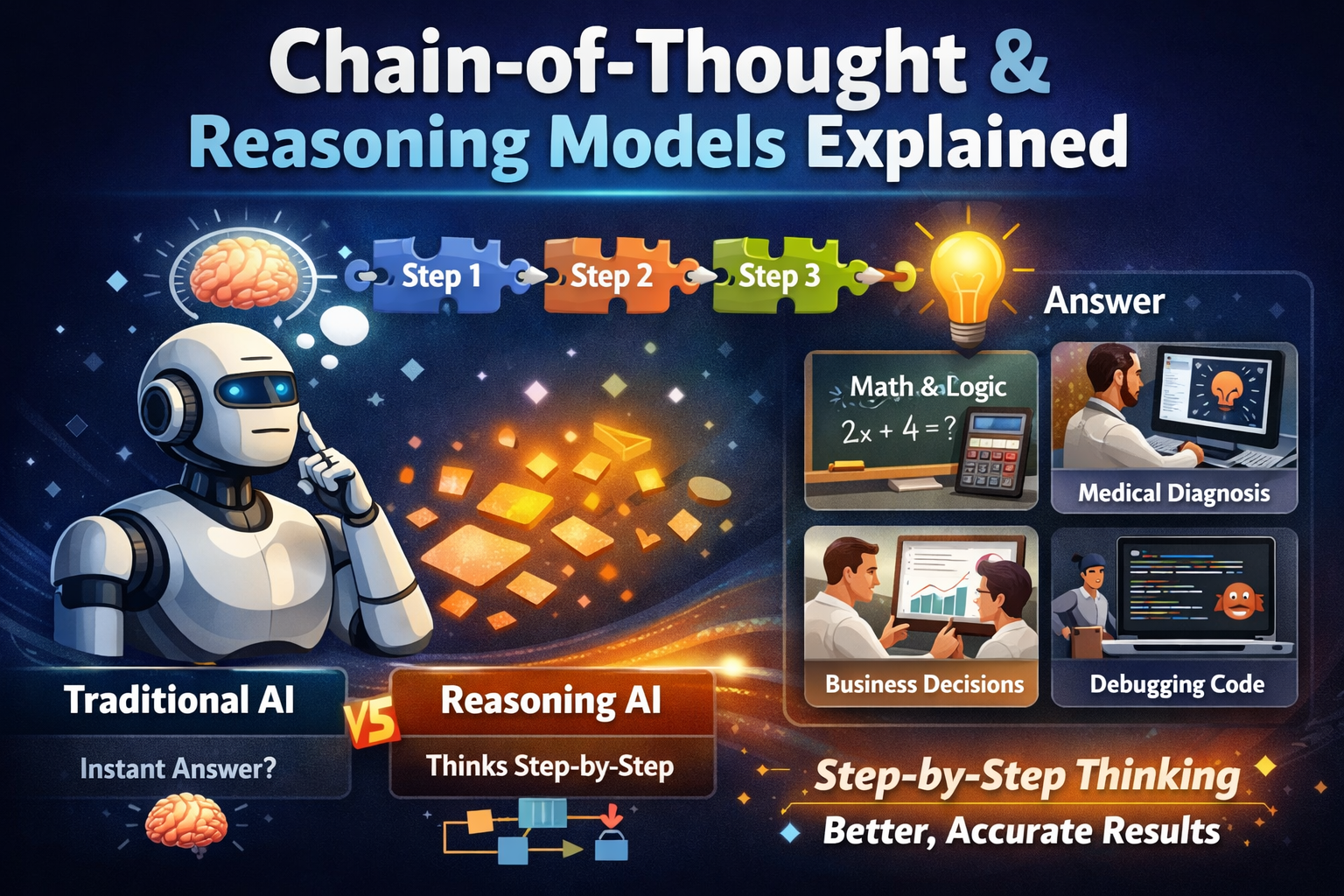

Artificial intelligence is no longer just a tool that waits for instructions. A new generation of AI systems — called Agentic AI — can plan, make decisions, and complete complex tasks on their own. This shift is changing how businesses operate, how software is built, and how people work every day. Here is a closer look at the key AI trends driving this transformation.
What is Agentic AI and How Does It Work?
Agentic AI refers to AI systems that go beyond simple question-and-answer interactions. These systems can set goals, break them into steps, and execute tasks automatically without needing constant human guidance.
Think of it as the difference between a calculator and a personal assistant. A calculator waits for input. An AI agent, on the other hand, can receive a broad objective — like researching a topic, drafting a report, and sending it — and handle the entire process independently.
This makes Agentic AI one of the most significant developments in the technology space right now. Businesses are already exploring its use in areas like customer service, data analysis, and software development.
Generative AI, Multimodal Systems, and Industry-Specific Models
Generative AI has moved well past text generation. Today, these systems can produce images, videos, code, and full applications. Marketing teams, designers, and content creators are using generative AI to speed up their workflows and reduce production costs.
Alongside this, multimodal AI is gaining ground. These systems can process text, images, audio, and video simultaneously, making them far more capable than earlier single-input models. This improves everything from search engines to customer-facing chatbots.
Companies are also building industry-specific AI models tailored for sectors like healthcare, finance, and e-commerce. Unlike general-purpose models, these custom systems are trained on domain-specific data, which means they deliver more accurate and relevant results for specialized tasks.
| AI Type | Key Capability | Common Use Case |
|---|---|---|
| Agentic AI | Plans and executes tasks autonomously | Business process automation |
| Generative AI | Creates text, images, video, code | Marketing, design, development |
| Multimodal AI | Processes multiple data types at once | Search, chatbots, content tools |
| Industry-Specific AI | Trained for a specific domain | Healthcare diagnosis, financial analysis |
AI in Healthcare, Cybersecurity, and Scientific Research
In healthcare, AI is helping doctors detect diseases earlier, supporting faster drug discovery, and assisting with complex medical decisions. Researchers are also using AI to accelerate scientific work across biology, chemistry, and climate science.
Cybersecurity is another area where AI is making a real difference. AI-powered systems can detect threats, identify fraud patterns, and respond to attacks faster than any human team. However, the same technology is also being used by bad actors, which makes AI-driven security more critical than ever.
Key areas where AI is having a direct impact include:
- Medical diagnosis — faster and more accurate detection of diseases
- Drug discovery — reducing the time needed to develop new treatments
- Fraud detection — identifying suspicious activity in real time
- Threat intelligence — monitoring systems around the clock for vulnerabilities
Human-AI Collaboration, Explainable AI, and Ethical Concerns
Despite fears about job displacement, the current reality is that AI is working alongside humans rather than replacing them. Employees across industries are using AI tools to handle repetitive tasks, freeing up time for more creative and strategic work. This collaboration is quickly becoming standard practice in modern workplaces.
At the same time, there is growing demand for Explainable AI — systems that can show how and why they reached a particular decision. This is especially important in high-stakes fields like finance and healthcare, where transparency builds trust.
Ethical concerns are also rising as AI becomes more powerful. Governments and organizations around the world are working on regulations to address issues like data privacy, algorithmic bias, and the potential for misuse. Responsible AI development is no longer optional — it is becoming a legal and social requirement.
Physical AI, Infrastructure Growth, and the Road Ahead
AI is no longer confined to screens and software. Physical AI — the combination of AI with robotics and real-world machines — is expanding rapidly. From factory automation to self-driving vehicles, AI is entering physical environments and taking on tasks that once required human hands.
Supporting all of this growth requires massive infrastructure. Companies are investing heavily in GPUs, large-scale data centers, and cloud computing capacity to keep up with the demands of modern AI systems. Machine learning models are also becoming more efficient, with the focus shifting from simply building larger models to building smarter, faster ones that perform better in real-world conditions.
AI tools for software development are also changing how applications are built. Developers now use AI assistants to write code, identify bugs, and speed up the entire development cycle.
In everyday life, AI is already present in smart assistants, personalized recommendations, and navigation tools — making technology more accessible to people who are not technical experts.
The direction is clear: AI is moving from the background to the center of how the world works. Whether in business, science, security, or daily life, understanding these trends is essential for anyone looking to stay informed and prepared for what comes next.
Frequently Asked Questions
Agentic AI refers to AI systems that can set goals, plan steps, and complete tasks on their own without needing constant human instructions. Unlike basic AI tools that only respond to commands, agentic systems act more like digital workers that handle full workflows independently.
Regular AI typically responds to a single input and gives a single output, like answering a question or generating an image. Agentic AI goes further by breaking down a complex goal into multiple steps and executing each one automatically, making decisions along the way.
Industries like healthcare, finance, e-commerce, cybersecurity, and software development stand to benefit the most. Agentic AI can automate complex workflows, support medical decisions, detect fraud, and help developers write and test code more efficiently.