Artificial intelligence is no longer limited to massive cloud servers and data centres. Thanks to Small Language Models (SLMs) and On-Device AI, your smartphone, smartwatch, and even your car can now run powerful AI features — without needing a constant internet connection. This shift is making AI faster, more private, and accessible to everyone.
What Are Small Language Models (SLMs)?
Most people are familiar with Large Language Models (LLMs) like ChatGPT. These are powerful but require heavy computing resources and internet access to work. Small Language Models are a compact alternative designed to run directly on everyday devices.
Here is how SLMs differ from traditional LLMs:
- Smaller size: SLMs use far fewer parameters, making them lightweight enough to fit on a phone or laptop.
- Task-focused: Instead of trying to know everything, SLMs are trained for specific tasks like translation, text prediction, or voice recognition.
- Device-friendly: They can run on the hardware already inside your device without needing cloud support.
Think of it this way — a large language model is like a massive library, while an SLM is like a well-organised pocket guidebook that gives you quick, useful answers on the go.
What Is On-Device AI and How Does It Work?
Traditionally, when you use an AI feature on your phone, your data travels to a remote cloud server, gets processed, and the result is sent back to you. This process takes time and requires internet access.
On-Device AI changes this by running the entire AI process locally — right on your phone, tablet, laptop, or wearable device.
Key benefits of On-Device AI include:
- Speed: Responses are near-instant because there is no round trip to a server.
- Privacy: Your personal data stays on your device and is never sent to external servers.
- Offline functionality: Features like speech-to-text or real-time translation work even without a network connection.
- Lower costs: Businesses save on cloud computing expenses, and users benefit from more affordable products.
Why SLMs and On-Device AI Are Important Right Now
The combination of SLMs and On-Device AI addresses several real problems that users and businesses face with cloud-dependent AI systems.
| Feature | Cloud-Based AI | On-Device AI with SLMs |
|---|---|---|
| Internet Required | Yes | No |
| Response Speed | Moderate (depends on network) | Fast (instant) |
| Data Privacy | Data sent to servers | Data stays on device |
| Energy Use | High (server-side) | Lower (device-side) |
| Cost | Higher (cloud fees) | More affordable |
Real-World Applications of On-Device AI and SLMs
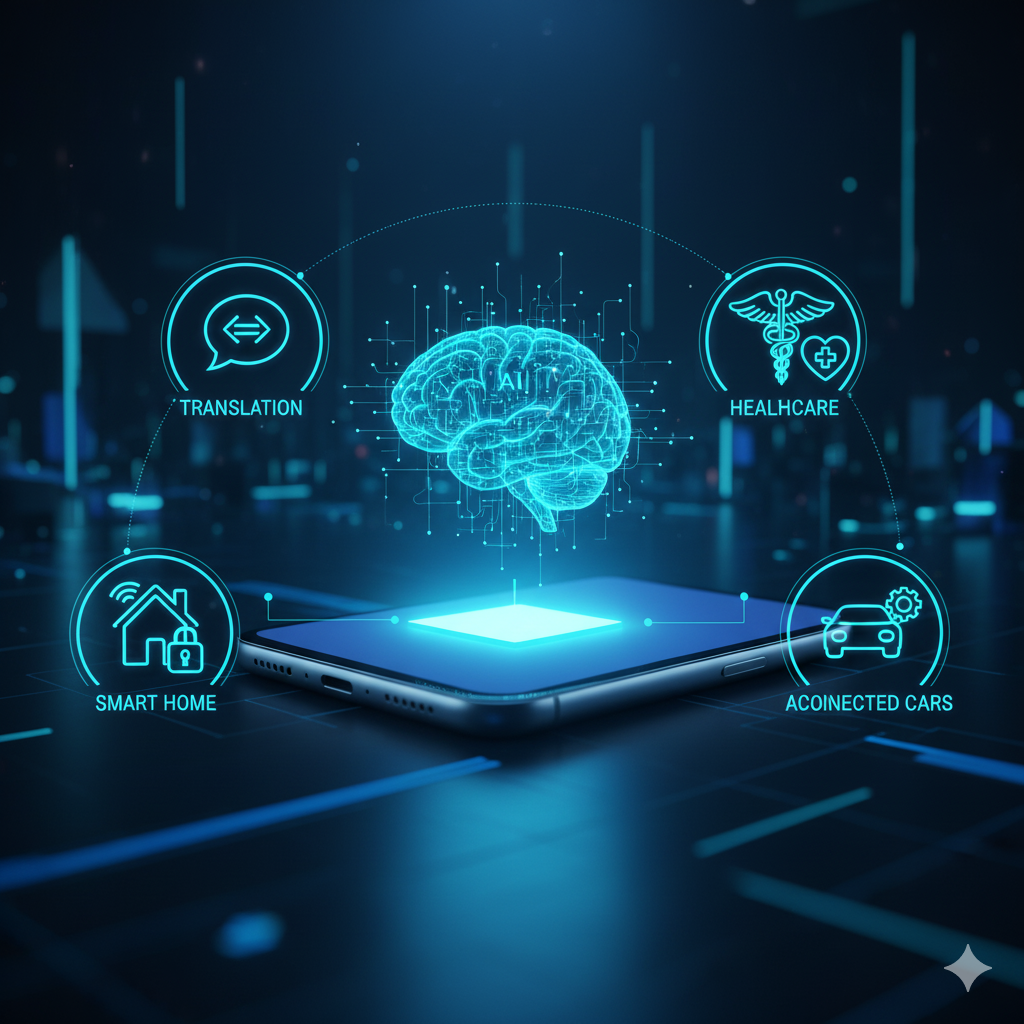
SLMs and On-Device AI are already being used across several industries. Here are some practical examples:
- Smartphones: Smart text prediction, intelligent camera features, and real-time language translation that works offline.
- Healthcare: Handheld medical devices that assess patient health data locally without sending sensitive information to the cloud.
- Smart Homes: Voice assistants that respond to commands entirely within your home network, without relying on external servers.
- Automobiles: Driver assistance systems and safety alerts that function reliably even in areas with no mobile network coverage.
- Wearables: Smartwatches that monitor health metrics and provide instant feedback without draining battery through constant cloud communication.
What the Future Holds for SLMs and On-Device AI
The growth of SLMs and On-Device AI is expected to accelerate significantly in the coming years. Several trends are already taking shape:
- Smartphones are becoming personal AI hubs capable of handling complex tasks locally.
- Smartwatches and fitness bands will offer real-time health insights powered by on-device models.
- Businesses will deploy custom small models trained specifically for their industry needs.
- Smart cities will use edge AI devices to manage traffic, energy, and public services more efficiently.
This direction points toward an AI experience that is always available, personalised to individual users, and far more trustworthy from a privacy standpoint.
As chip manufacturers like Qualcomm, Apple, and MediaTek continue to build dedicated AI processors into their hardware, running SLMs on consumer devices will only become more capable and energy-efficient over time.
In summary, Small Language Models and On-Device AI represent a practical and user-focused direction for artificial intelligence. Rather than depending entirely on the cloud, AI is moving closer to where people actually live and work — inside the devices they carry every day. This shift makes AI faster, safer, and more useful for everyone, regardless of internet access or technical expertise.
Frequently Asked Questions
A Large Language Model (LLM) like ChatGPT is trained on massive datasets and requires powerful cloud servers to run. A Small Language Model (SLM) is a compact version designed to run on everyday devices like smartphones. SLMs focus on specific tasks rather than general knowledge, making them faster and more suitable for on-device use.
Yes. On-Device AI processes data locally on your device, so it does not need an internet connection to function. Features like offline translation, speech-to-text, and smart text prediction can all work without any network access.
Generally, yes. With On-Device AI, your data is processed and stored on your own device and is not sent to external servers. This reduces the risk of data breaches or unauthorised access, making it a more privacy-friendly option compared to cloud-based AI systems.