Artificial intelligence is now deeply woven into healthcare, finance, transportation, and everyday consumer apps. But as AI adoption grows rapidly, so do the security risks targeting it. One of the most serious and underreported threats is data poisoning — a cyberattack method that can silently corrupt how AI systems think and behave.
What Is Data Poisoning in AI?
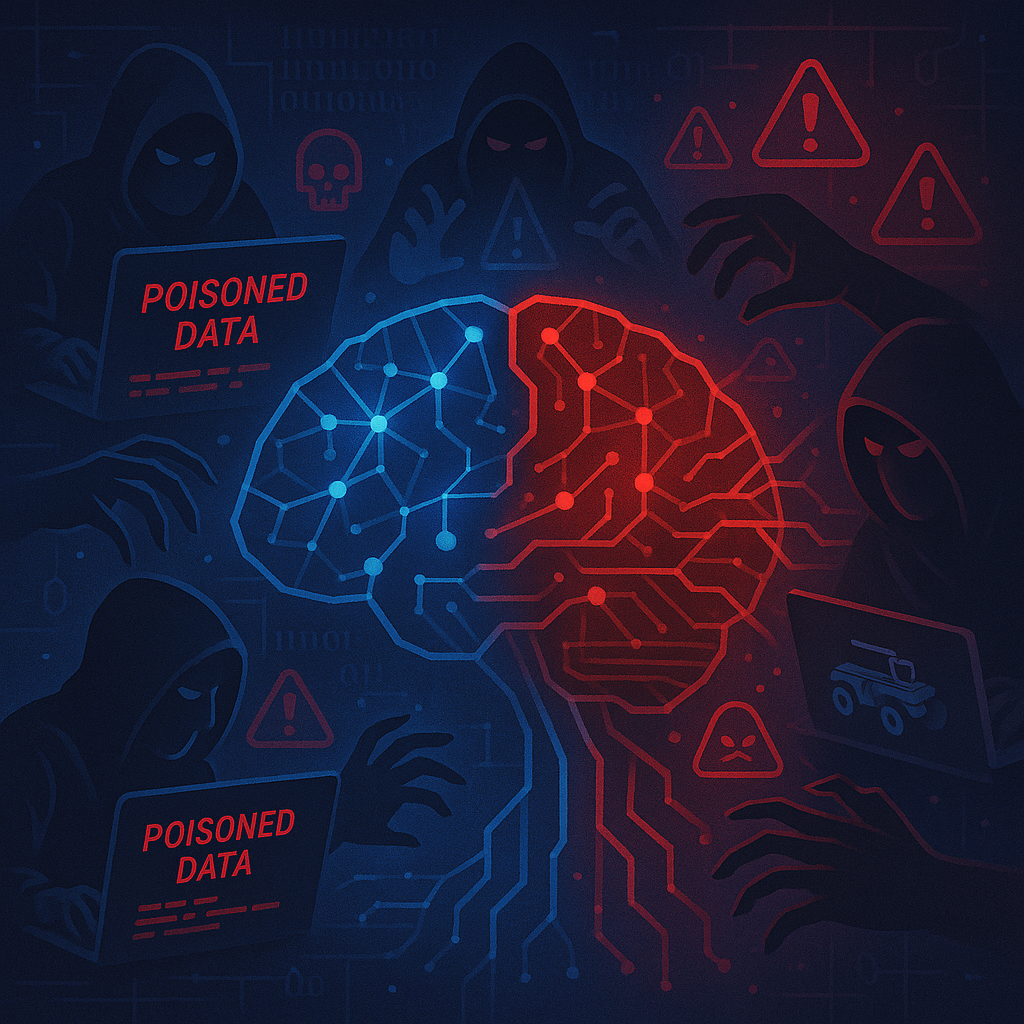
Data poisoning is a type of cyberattack where bad actors inject false, manipulated, or harmful data into the training datasets used to build AI models. Since AI systems learn entirely from the data they are trained on, even a small amount of corrupted information can cause the model to make wrong decisions, develop biases, or behave in dangerous ways.
Unlike traditional hacking, which targets software vulnerabilities, data poisoning attacks the foundation of an AI system — its data. This makes it harder to detect and far more damaging in the long run.
Why Data Poisoning Is a Serious Security Risk
The consequences of a successful data poisoning attack can range from minor errors to life-threatening failures. Consider these real-world scenarios:
- Self-driving vehicles: An autonomous car trained on poisoned data might fail to recognize stop signs or pedestrians, leading to accidents.
- Financial applications: An AI-powered investment tool could recommend poor or harmful financial decisions if its training data has been tampered with.
- Healthcare diagnostics: Medical AI systems trained on corrupted data could misdiagnose patients or recommend incorrect treatments.
- Cybersecurity tools: AI-based threat detection systems could be trained to ignore specific attack patterns, leaving networks exposed.
In each case, the damage is not just technical — it can affect human safety, financial stability, and public trust in technology.
How Data Poisoning Attacks Are Carried Out
Attackers typically blend fake or misleading data into large, legitimate datasets. Because AI training sets often contain millions of data points, spotting a small number of corrupted entries is extremely difficult without proper safeguards.
Once an AI model trains on this poisoned data, it can:
- Produce incorrect or misleading outputs
- Miss important patterns it should have learned
- Develop biased or unfair decision-making behaviors
- Become vulnerable to specific adversarial inputs that attackers can exploit later
This is why data poisoning is considered one of the most dangerous forms of adversarial attacks on AI systems today. The attack happens before deployment, making it difficult to trace after the fact.
How to Protect AI Systems from Data Poisoning
Defending against data poisoning requires a proactive and layered approach to data security. Here are key measures that organizations and developers should follow:
- Scrutinize training data thoroughly: Verify the source and integrity of all data before using it to train any AI model.
- Use anomaly detection tools: Deploy software that can identify unusual patterns or suspicious changes in datasets before training begins.
- Maintain data diversity and balance: A well-balanced and varied dataset is harder for attackers to manipulate without detection.
- Monitor AI performance continuously: Regularly test and audit AI model outputs to catch unexpected or erratic behavior early.
- Restrict data access: Limit who can contribute to or modify training datasets, reducing the risk of insider threats or unauthorized tampering.
| Protection Method | What It Does |
|---|---|
| Data Verification | Confirms data integrity before training |
| Anomaly Detection | Flags suspicious or unusual data entries |
| Diverse Datasets | Makes manipulation harder to execute |
| Performance Monitoring | Detects odd model behavior post-deployment |
| Access Control | Limits who can alter training data |
Why Data Poisoning Threats Will Keep Growing
As more businesses across industries adopt AI, the attack surface for data poisoning continues to expand. Cybercriminals are becoming more sophisticated, and future attacks could target critical systems in healthcare, banking, national security, and public infrastructure.
The growing use of third-party datasets and open-source training data also increases risk. When organizations rely on data they did not collect themselves, they have less control over its integrity.
Staying ahead of this threat requires investment in robust data governance, security audits, and ongoing research into adversarial machine learning defenses. Governments and regulatory bodies are also beginning to pay attention, with data security for AI systems becoming a key policy concern globally.
Data poisoning is not a distant or theoretical risk — it is happening now, and its impact will only grow as AI becomes more central to critical decisions. Organizations that take data security seriously today will be far better positioned to build trustworthy and resilient AI systems for the future.
Frequently Asked Questions
A data poisoning attack occurs when an attacker injects false or manipulated data into the training dataset of an AI model. This causes the model to learn incorrect patterns, make biased decisions, or behave in ways that benefit the attacker.
Organizations can detect data poisoning by using anomaly detection tools to flag unusual data entries, regularly auditing training datasets for inconsistencies, monitoring AI model performance for unexpected behavior, and restricting access to training data sources.
Industries that rely heavily on AI for critical decisions are most at risk. These include healthcare, where diagnostic AI could be compromised, financial services, where investment algorithms could be manipulated, autonomous vehicles, and cybersecurity systems that depend on AI for threat detection.