Blockchain technology is widely praised for its transparency, but that same openness creates a serious privacy problem. On networks like Bitcoin and Ethereum, anyone can view wallet addresses, transaction amounts, and complete transaction histories. For individuals and businesses handling sensitive data, this level of exposure is a real concern. Zero-Knowledge Proofs, or ZKPs, are emerging as one of the most promising solutions to this challenge.
What Are Zero-Knowledge Proofs?
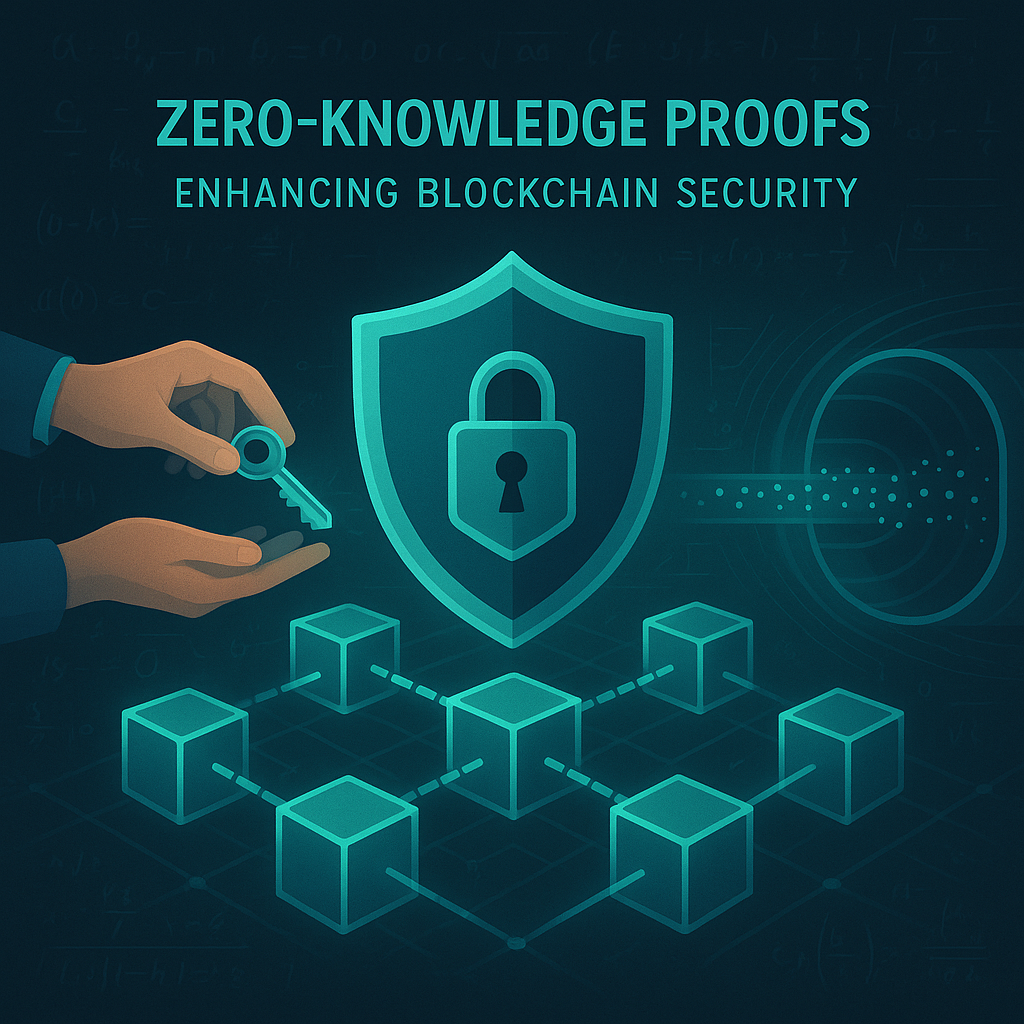
A Zero-Knowledge Proof is a cryptographic method that lets one party prove to another that a statement is true — without revealing any of the underlying information that makes it true.
Think of it this way: imagine you unlock a door in front of someone to prove you have the key, but you never actually show them the key. They trust you because the door opened, but your key stays completely private.
In blockchain terms, ZKPs allow a user to prove that a transaction is valid — without exposing who sent it, who received it, or how much was transferred. The network verifies the proof, not the data itself.
Why Blockchain Needs Better Privacy
Public blockchains are designed to be open and trustless. Every transaction is recorded on a shared ledger that anyone can inspect. While this ensures security and accountability, it also exposes sensitive details, including:
- Wallet addresses of senders and receivers
- Exact transaction amounts
- Full transaction history linked to each address
This level of transparency creates problems for several groups:
- Individuals who want financial privacy in their day-to-day transactions
- Businesses with confidential pricing, contracts, or supplier relationships
- Regulated industries that must handle personal data carefully under laws like GDPR
ZKPs address these concerns by hiding critical details while still allowing the network to confirm that every transaction follows the rules.
How Zero-Knowledge Proofs Work — Step by Step
The process behind ZKPs is complex mathematically, but the concept is straightforward:
- Step 1: A user initiates a transaction but keeps certain details private.
- Step 2: They generate a cryptographic proof showing the transaction meets all required conditions, such as having a sufficient account balance.
- Step 3: Other participants on the blockchain verify the proof — not the actual transaction data.
- Step 4: If the proof checks out, the transaction is added to the blockchain.
The result is a system where privacy is protected without sacrificing the integrity or security of the network.
Real-World Projects Using Zero-Knowledge Proofs
ZKPs are not just a theoretical concept. Several active blockchain projects already use this technology in meaningful ways.
| Project | ZKP Type Used | Primary Use Case |
|---|---|---|
| Zcash | zk-SNARKs | Private payments on a public blockchain |
| zkSync | zk-Rollups | Ethereum Layer 2 scaling with lower gas fees |
| StarkNet | STARKs | High-throughput Ethereum Layer 2 transactions |
| Privacy Smart Contracts | Various ZKP methods | Healthcare, legal, and finance applications |
Zcash uses zk-SNARKs to hide the sender, recipient, and amount in every shielded transaction, making private payments possible on a fully public chain.
zkSync and StarkNet use zk-Rollups to bundle many transactions off-chain and submit a single proof to Ethereum’s main network. This reduces gas fees, increases transaction speed, and keeps the main chain secure.
Privacy-focused smart contracts powered by ZKPs allow developers to build applications where sensitive data — such as user identity, medical records, or pricing rules — stays confidential. This is especially valuable in healthcare, legal technology, and financial services.
Key Benefits and Current Limitations of ZKPs
Zero-Knowledge Proofs bring several strong advantages to blockchain networks:
- User data stays private: Wallet addresses, balances, and personal details are never exposed during verification.
- Regulatory compliance without data sharing: Companies can prove they follow rules like KYC or age verification without handing over raw user data.
- Better speed and scalability: By processing transactions off the main chain and submitting a single proof, networks handle more volume without congestion.
- Stronger security: Less data shared publicly means fewer opportunities for bad actors to exploit sensitive information.
However, ZKPs also come with real challenges that developers are still working to overcome:
- Technical complexity: Implementing ZKPs correctly requires deep cryptographic expertise, making it difficult for newer developers.
- High computational cost: Generating proofs demands significant processing power, which can slow things down or increase costs.
- Limited ecosystem support: Not all blockchain platforms currently support ZKP technology natively.
The good news is that these limitations are shrinking as more developers adopt the technology and tooling improves across the industry.
What the Future Holds for Blockchain Privacy
As data privacy becomes a growing concern globally, blockchain networks must adapt to meet user expectations and regulatory requirements. Zero-Knowledge Proofs offer a practical path forward — one that balances the core strengths of blockchain, like trust and decentralization, with the privacy protections that users and businesses need.
In the coming years, the blockchain space is likely to see a rise in ZK-friendly networks built from the ground up with privacy in mind, more consumer apps in finance and healthcare that use ZKPs to protect user data, and cross-chain privacy tools that let users transact privately across multiple networks.
Zero-Knowledge Proofs represent a significant step toward making blockchain technology practical for a much wider range of real-world applications — from personal finance to enterprise data management.
Frequently Asked Questions
A Zero-Knowledge Proof is a cryptographic method that lets one person prove to another that something is true without revealing the actual information behind it. For example, you can prove you know a password without ever showing the password itself.
Several active projects use ZKPs today. Zcash uses zk-SNARKs for private payments. zkSync and StarkNet use zk-Rollups to scale Ethereum transactions. Privacy-focused smart contract platforms also use ZKP methods in healthcare, finance, and legal applications.
ZKPs are considered highly secure from a cryptographic standpoint. However, they are computationally intensive and technically complex to implement correctly. As tooling and developer expertise improve, these challenges are gradually being addressed across the blockchain industry.