
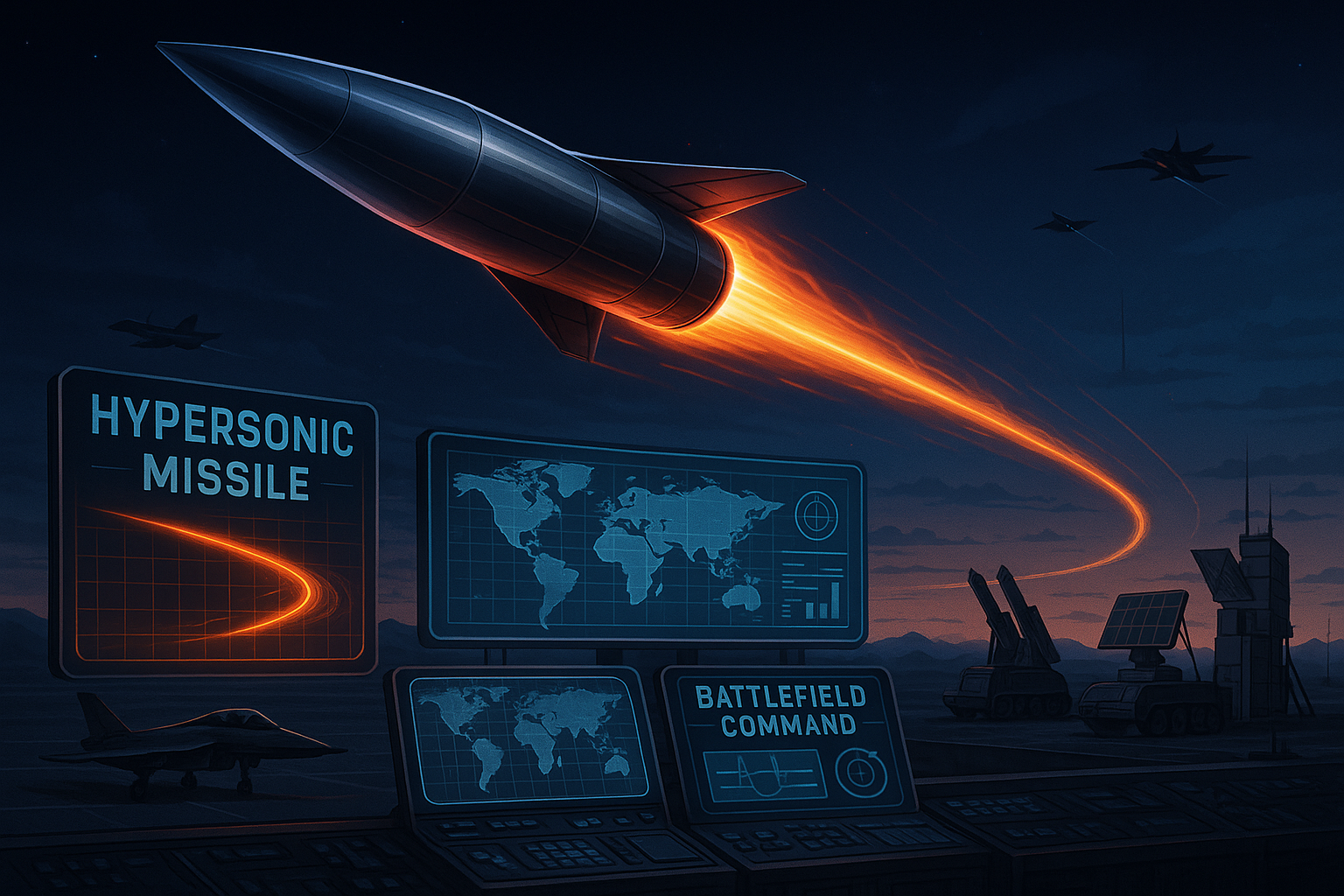
Hypersonic technology has emerged as one of the most significant shifts in modern military capability. With weapons and vehicles capable of traveling at more than five times the speed of sound, nations across the world are racing to develop, deploy, and defend against this new class of threats. Understanding what hypersonic technology is, how it works, and why it matters is essential for anyone following global defense and security developments.
What Does Hypersonic Mean?
The term hypersonic refers to speeds of Mach 5 or above — that is, five times the speed of sound, which translates to over 6,000 km/h. At that pace, a hypersonic missile could cross an entire country in just a few minutes.
But raw speed is only part of the story. What makes hypersonic technology particularly significant in defense is the combination of speed, maneuverability, and unpredictability. These weapons move so fast and can change course so suddenly that existing defense systems struggle to track or intercept them.
How Hypersonic Weapons Work
Building a vehicle that can sustain hypersonic speeds requires advanced materials, specialized propulsion systems, and precise engineering. There are two primary types of hypersonic weapons currently under development by major military powers:
- Hypersonic Glide Vehicles (HGVs): These are launched into the upper atmosphere by rockets and then glide at hypersonic speeds toward their target. They can maneuver mid-flight, making them extremely difficult to intercept.
- Hypersonic Cruise Missiles (HCMs): These use a scramjet engine — a type of air-breathing engine — to sustain hypersonic flight through the atmosphere. Unlike rockets, scramjets use oxygen from the surrounding air, making them more efficient over longer distances.
Both types are designed to be fast, agile, and hard to predict, giving adversaries very little time to respond.
Why Hypersonic Technology Matters for Defense
The strategic implications of hypersonic weapons are significant. Here is why defense planners and governments are paying close attention:
- Near-instant strike capability: Traditional missiles take time to reach their targets. Hypersonic weapons can strike with very little warning, compressing decision-making time for defenders.
- Mid-flight course changes: Unlike ballistic missiles that follow a predictable arc, hypersonic weapons can shift direction during flight, making them far harder to track and intercept.
- High precision: Despite traveling at extreme speeds, these weapons are engineered to hit targets with considerable accuracy.
- Defeats current defense systems: Most existing missile defense systems are not designed to handle threats moving at hypersonic speeds, creating a significant gap in national security coverage.
| Feature | Hypersonic Glide Vehicle (HGV) | Hypersonic Cruise Missile (HCM) |
|---|---|---|
| Propulsion | Rocket-launched, then glides | Scramjet engine |
| Maneuverability | High | High |
| Interception Difficulty | Very High | Very High |
| Range | Long | Medium to Long |
Which Countries Are Developing Hypersonic Weapons?
The hypersonic arms race involves several major military powers, each investing heavily in both offensive and defensive capabilities:
- United States: The US military has multiple hypersonic programs underway across the Army, Navy, and Air Force, including the ARRW (Air-launched Rapid Response Weapon) program.
- China: China has conducted high-profile tests of hypersonic glide vehicles and is widely considered to be among the most advanced nations in this field.
- Russia: Russia has claimed operational deployment of hypersonic missiles, including the Avangard glide vehicle and the Kinzhal air-launched missile.
- India: India is actively developing hypersonic technology through its defence research programs, with a focus on both cruise missiles and glide vehicles.
These nations are not only building hypersonic weapons but also investing in detection, tracking, and interception systems to defend against them.
Engineering Challenges and Global Risks
Despite the strategic advantages, developing hypersonic systems is extraordinarily difficult and expensive. Key engineering challenges include:
- Extreme heat management: At hypersonic speeds, friction with the atmosphere generates intense heat. Developing materials that can withstand these temperatures while keeping the weapon functional is a major technical hurdle.
- Massive development costs: Research, testing, and production of hypersonic systems require billions of dollars in investment, limiting development to well-funded nations.
- Guidance and control complexity: Keeping a weapon stable, accurate, and controllable at speeds above Mach 5 demands highly sophisticated engineering solutions.
Beyond engineering, hypersonic technology raises serious global security concerns:
- Arms race dynamics: As more countries develop hypersonic weapons, the risk of an accelerating arms race grows, potentially destabilizing international relations.
- Lack of international regulation: There are currently very few international treaties or agreements governing the development and use of hypersonic weapons.
- Escalation risk: The speed and unpredictability of these weapons could increase the chance of miscalculation or accidental conflict between nuclear-armed states.
Looking ahead, the next decade is expected to bring more advanced hypersonic weapons, improved space-based tracking systems, and new interception technologies such as directed-energy weapons and laser interceptors. Governments, militaries, and defense contractors worldwide are pouring resources into making these systems more reliable, more precise, and harder to counter.
Hypersonic technology is no longer a distant concept — it is actively reshaping how nations think about deterrence, warfare, and national security. As this technology matures, its impact on global defense strategy will only grow more profound.
Frequently Asked Questions
Hypersonic refers to speeds of Mach 5 or higher, which is five times the speed of sound — equivalent to over 6,000 km/h. At this speed, a missile can cross an entire country in just minutes.
A hypersonic glide vehicle (HGV) is launched by a rocket and then glides at hypersonic speed toward its target, while a hypersonic cruise missile (HCM) uses a scramjet engine to sustain powered hypersonic flight through the atmosphere.
The United States, China, Russia, and India are among the leading nations actively developing hypersonic weapons. Russia has claimed operational deployment of systems like the Avangard and Kinzhal, while the US and China have conducted multiple test programs.