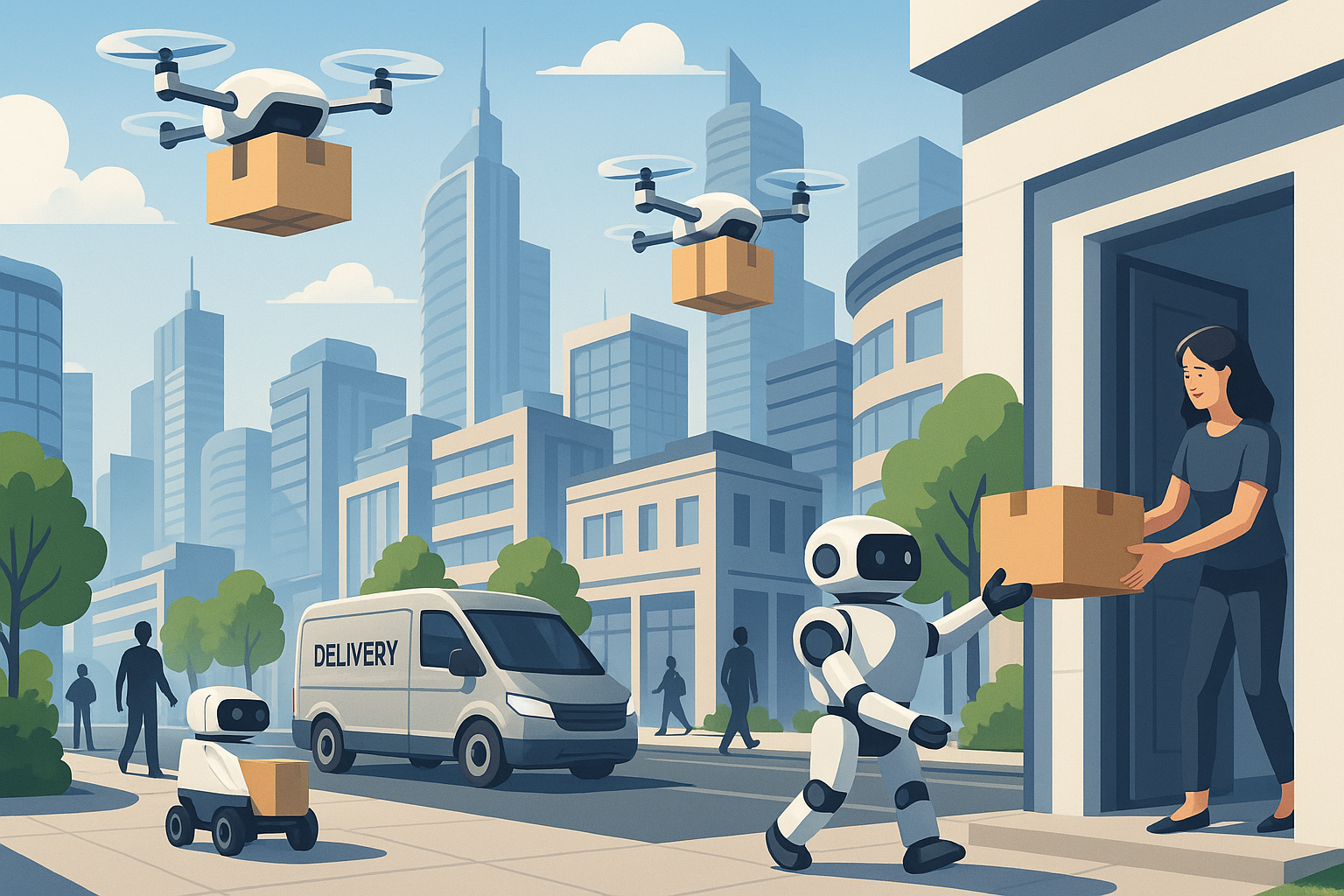
Last-mile delivery — the final leg of getting a package from a warehouse to your doorstep — sounds simple, but it is often the most expensive, slowest, and most complicated part of the entire supply chain. As online shopping continues to grow at a rapid pace, the pressure on delivery systems has never been higher. Drones and ground robots are now stepping in to change how this works.
Why Traditional Delivery Methods Are Struggling
For decades, delivery trucks and human drivers have been the backbone of last-mile logistics. But this model has clear limitations. Traffic congestion in cities slows down deliveries. Rising fuel prices push up costs. Driver shortages and fixed working hours create bottlenecks during peak shopping seasons.
E-commerce giants and logistics companies are now looking at technology-driven alternatives to handle the growing volume of deliveries without simply adding more trucks and drivers to already crowded roads.
How Drones Are Taking Delivery to the Skies
Delivery drones are compact, unmanned flying devices that carry packages directly to a customer’s location through the air. They are especially useful in areas with heavy road traffic or difficult terrain — places where a delivery van would take much longer to reach.
Drones use GPS navigation and onboard sensors to plot their route and land safely. Several companies are already running drone delivery pilots for time-sensitive items like medicines, food orders, and e-commerce packages.
Key benefits of drone delivery:
- Significantly faster delivery times compared to road transport
- Bypasses road congestion entirely
- Can reach remote or hard-to-access locations
- Runs on electricity, reducing carbon emissions
- Reduces dependency on human drivers for short-distance deliveries
Ground Robots: The Sidewalk Couriers of Urban Areas
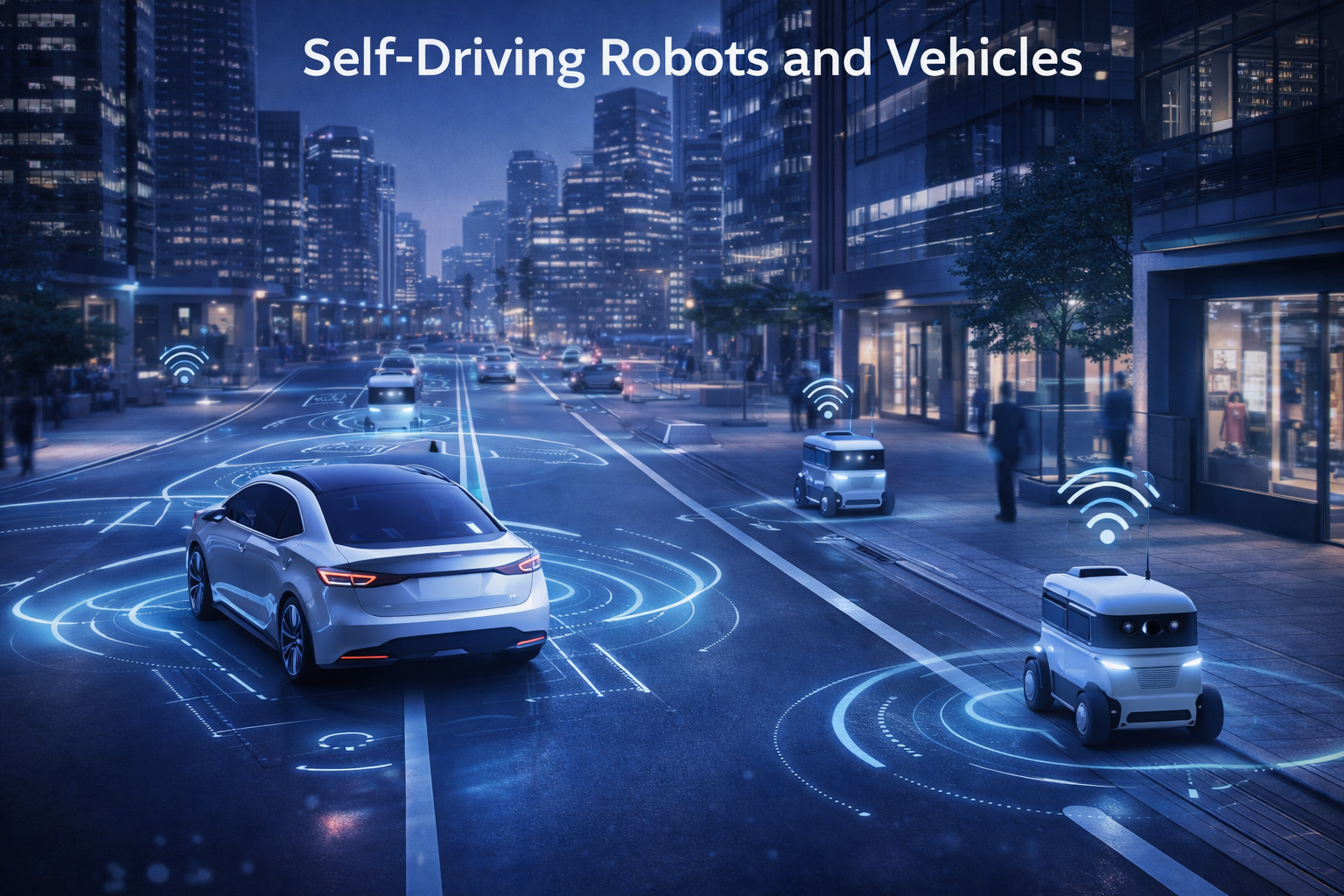
While drones handle aerial delivery, ground-based delivery robots are quietly rolling through city streets and college campuses. These small, wheeled machines travel on sidewalks, carrying packages directly to homes or offices over short distances.
Equipped with cameras, sensors, and mapping technology, these robots can navigate around pedestrians, avoid obstacles, and wait at crosswalks just like a careful human would. They are particularly effective for delivering food, small parcels, and everyday essentials within a limited radius.
Key benefits of ground delivery robots:
- Cost-effective for short, local deliveries
- Can operate around the clock without breaks
- No driver required, reducing labour costs
- Electric-powered, making them environmentally friendly
- Well-suited for dense urban neighbourhoods and campuses
Comparing Drones and Ground Robots for Last-Mile Delivery
| Feature | Drones | Ground Robots |
|---|---|---|
| Delivery Speed | Very fast | Moderate |
| Best For | Remote areas, urgent deliveries | Urban neighbourhoods, campuses |
| Weather Dependency | High (affected by rain, wind) | Low |
| Regulatory Hurdles | Significant (airspace rules) | Moderate (sidewalk regulations) |
| Power Source | Electric | Electric |
Challenges That Still Need to Be Solved
Despite the promise these technologies hold, widespread adoption is not without obstacles. Drones face strict regulations around flying in urban airspace, raising concerns about safety, privacy, and collision risks. Bad weather — heavy rain, strong winds — can ground drone fleets entirely.
Ground robots need well-maintained sidewalks, reliable high-speed internet connectivity, and accurate digital maps to function properly. In cities with uneven infrastructure, this can be a real challenge.
The cost of manufacturing, deploying, and maintaining these machines also remains high for many logistics companies, particularly smaller players who cannot absorb large upfront investments.
A Greener Path Forward for Logistics
One of the most compelling arguments for drone and robot delivery is their environmental impact. Both technologies run on clean electric power, which means fewer diesel-powered delivery vans on the road and lower carbon emissions overall.
As cities grow more congested and climate commitments become stricter, electric autonomous delivery solutions offer a practical way to reduce the logistics industry’s carbon footprint. Over time, as technology matures and costs come down, these systems could make deliveries faster, cheaper, and significantly cleaner for everyone.
The shift will not happen overnight, but the direction is clear. Last-mile delivery is moving towards a future where packages arrive faster, with less pollution, and without a driver behind the wheel.
Frequently Asked Questions
Last-mile delivery refers to the final stage of the delivery process, where a package travels from a local warehouse or distribution centre to the customer's doorstep. It is considered the most critical part of the supply chain because it directly affects customer experience, and it is also the most expensive and time-consuming stage of shipping.
Delivery drones use a combination of GPS for route planning and onboard sensors to detect and avoid obstacles during flight. They are programmed to follow specific flight paths and can adjust in real time to avoid collisions, making them capable of navigating both open and semi-urban environments.
Ground delivery robots are designed with multiple cameras and sensors that allow them to detect pedestrians, obstacles, and traffic signals. They are built to operate safely on sidewalks at low speeds. However, their effectiveness depends on well-maintained infrastructure, reliable internet connectivity, and clear local regulations governing their use in public spaces.