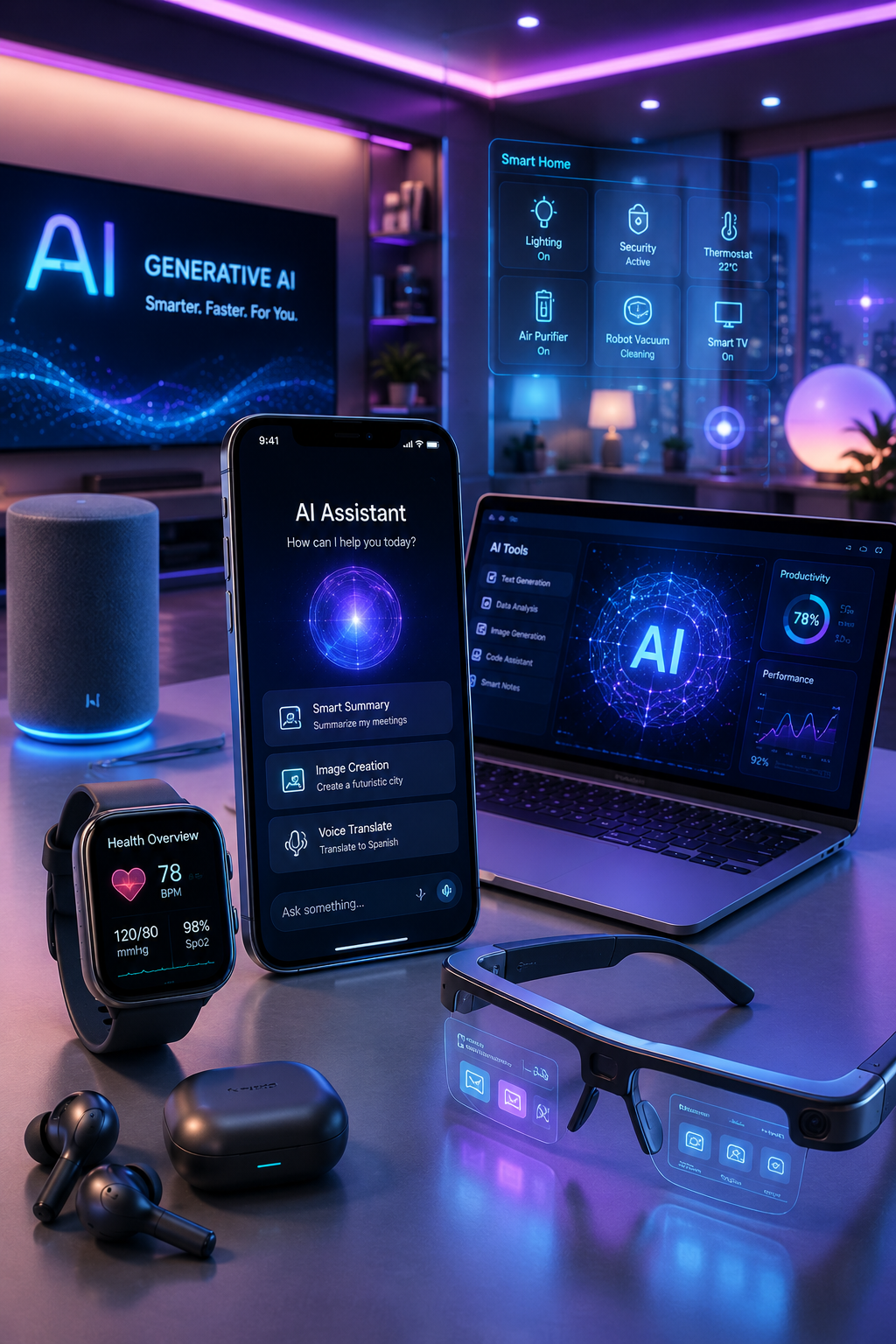
Generative AI has moved well beyond chatbots and image generators. It is now quietly reshaping the devices sitting in your pocket, on your wrist, and inside your home. From smarter smartphones to health-aware wearables, consumer electronics are getting a significant upgrade — and users are already feeling the difference.
What Generative AI Actually Does Inside Your Devices
Generative AI is a type of artificial intelligence that creates content — text, images, summaries, recommendations, and more — based on what it has learned from large amounts of data. Unlike older software that simply follows fixed rules, Generative AI understands context and generates responses that feel natural and relevant.
This capability is what makes it so valuable inside consumer devices. Instead of waiting for a specific command, your device can now anticipate what you need and respond in a helpful, human-like way.
Smartphones Are Becoming Personal Assistants
Smartphones are the most visible example of Generative AI at work. Modern flagship phones from brands like Apple, Samsung, and Google now come with built-in AI features that go far beyond voice commands.
- Message summarization: Long email threads and chat conversations are condensed into quick summaries.
- Photo enhancement: AI automatically improves image quality, removes unwanted objects, and adjusts lighting.
- Real-time translation: Conversations in different languages are translated on the spot.
- Content creation: Users can draft messages, captions, and documents with AI assistance.
These features reduce the time users spend switching between apps and help them get more done with less effort.
Laptops, Wearables, and Smart Homes Getting Smarter
The impact of Generative AI is not limited to smartphones. It is spreading across the entire consumer electronics ecosystem.
Laptops and computers now offer AI-powered writing tools, document summarizers, and presentation builders. Students and professionals can complete tasks faster without getting stuck on repetitive work.
Smartwatches and fitness trackers are moving beyond simple step counting. With Generative AI, wearables can analyze health data, offer personalized fitness plans, and explain what your sleep or heart rate patterns actually mean for your wellbeing.
Smart home devices like speakers and security systems now understand natural conversation better. You no longer need to memorize exact commands — you can speak naturally and the device understands your intent.
| Device Type | Key AI Feature | User Benefit |
|---|---|---|
| Smartphones | Photo editing, message summarization | Faster communication and better photos |
| Laptops | Writing assistance, document summaries | Higher productivity and time savings |
| Smartwatches | Health insights, fitness recommendations | Personalized wellness guidance |
| Smart Speakers | Natural language understanding | Easier home control without memorizing commands |
Personalization Is the Biggest Advantage
One of the strongest reasons consumers are embracing AI-powered devices is personalization. Generative AI allows devices to learn individual habits and preferences over time.
Your phone might suggest the playlist you usually play during your morning run. Your laptop might auto-format documents the way you prefer. Your smartwatch might remind you to stretch based on your daily activity pattern.
This level of tailored experience makes devices feel less like tools and more like helpful companions that understand your routine.
Privacy, Security, and the Challenges Ahead
Despite the clear benefits, Generative AI in consumer electronics also raises serious concerns that manufacturers and regulators must address.
- Data privacy: AI features often rely on personal data, raising questions about how that information is stored and used.
- Security risks: More intelligent devices can also be more vulnerable to sophisticated attacks if not properly protected.
- AI accuracy: Generative AI can sometimes produce incorrect or misleading outputs, which can be a problem in health or financial contexts.
- User trust: Consumers need to feel confident that their devices are working in their interest, not just collecting data.
Technology companies like Apple, Google, Samsung, and Microsoft are investing heavily in on-device AI processing — meaning data stays on your device rather than being sent to the cloud — as one way to address privacy concerns.
As Generative AI becomes a standard feature across consumer electronics, the devices people use every day will grow more intelligent, more connected, and more attuned to individual needs. The shift is already underway — and it is only going to accelerate from here.
For consumers, the key is staying informed about what these features do, how data is handled, and how to make the most of the tools now available on devices they already own.
Frequently Asked Questions
Generative AI in consumer electronics refers to artificial intelligence built into devices like smartphones, laptops, and wearables that can create content, understand natural language, and provide personalized responses based on user behavior and preferences.
Many modern smartphones from Apple, Samsung, and Google, as well as laptops from Microsoft and other brands, smartwatches, fitness trackers, and smart home speakers now include Generative AI features for tasks like photo editing, message summarization, health insights, and voice interaction.
Privacy is a key concern. Many companies are shifting toward on-device AI processing, which means your data is handled locally on your device rather than sent to external servers. However, users should always review privacy settings and understand what data their devices collect and how it is used.