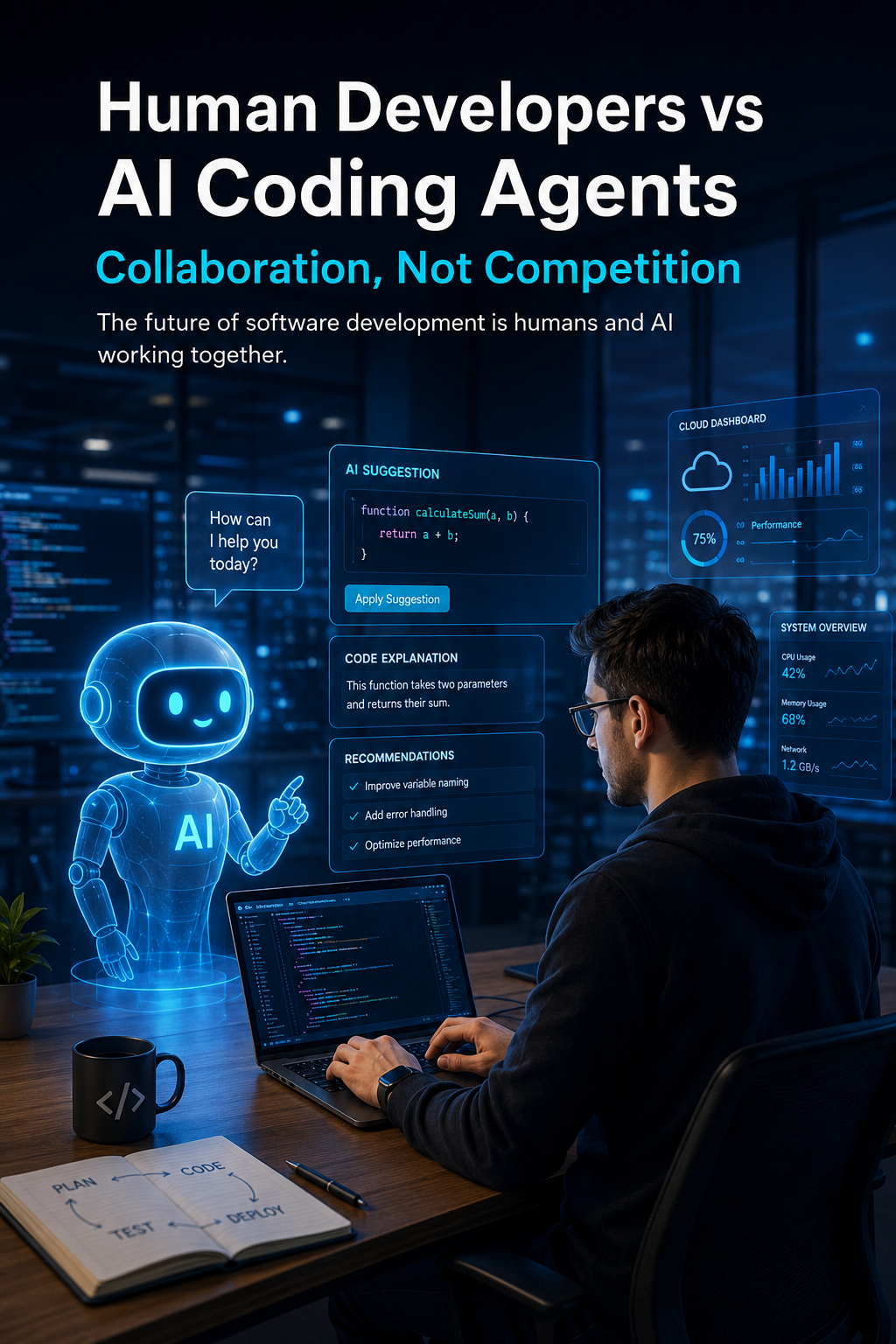
The rise of AI coding tools has sparked a major debate in the tech world: will artificial intelligence eventually replace software developers? The short answer is no. What is actually happening is far more interesting — AI and human developers are becoming a powerful team, each bringing strengths the other lacks.
What Are AI Coding Agents and What Can They Do?
AI coding agents are software tools designed to assist developers throughout the development process. They are not simple autocomplete features. These tools can generate entire code blocks, explain complex logic, detect bugs, write unit tests, and automate repetitive tasks that once consumed hours of developer time.
Popular AI coding assistants like GitHub Copilot, Amazon CodeWhisperer, and similar tools have already found their way into daily developer workflows. They act like smart assistants — capable of handling structured, pattern-based work with impressive speed.
- Generate boilerplate and starter code
- Suggest code improvements and refactoring
- Create automated unit tests
- Identify common coding errors and vulnerabilities
- Help developers learn new frameworks with examples
For routine development tasks, these tools can dramatically improve productivity and reduce manual effort.
Where Human Developers Remain Irreplaceable
AI coding agents are strong at pattern recognition, but software development is far more than writing code. Human developers bring something AI simply cannot replicate — understanding of people, business goals, and real-world context.
A developer working on a healthcare app, for example, must understand patient privacy concerns, regulatory compliance, and the emotional needs of end users. AI can generate the login form, but it cannot decide what data should be collected or how it should be protected.
Key areas where human developers remain essential include:
- Software architecture decisions — choosing the right structure for long-term scalability
- Security and compliance — understanding legal and ethical responsibilities
- User experience thinking — designing products that feel intuitive to real people
- Creative problem-solving — imagining solutions that do not yet exist
- Business alignment — connecting technical work to company goals
AI works from existing data and patterns. Humans can think beyond those patterns and create something entirely new.
How Human and AI Collaboration Works in Practice
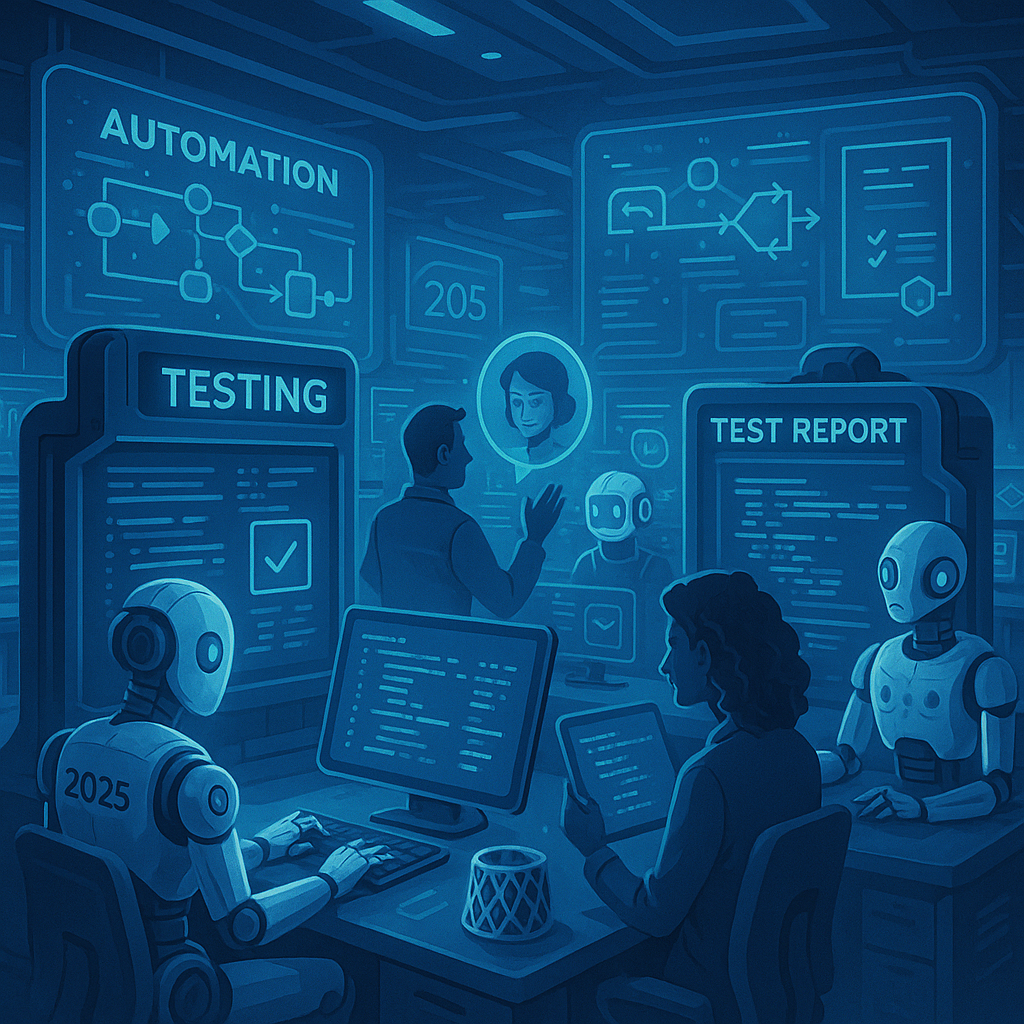
The most productive development teams today are not replacing developers with AI — they are using AI to make their developers more effective. This partnership looks different depending on the project, but the core idea is consistent: AI handles the repetitive work, humans handle the thinking.
A typical collaborative workflow might look like this:
- A developer describes a function requirement, and the AI generates a draft
- The developer reviews, tests, and refines the output
- AI runs automated tests and flags potential issues
- The developer makes architectural and business logic decisions
- AI documents the code while the developer moves to the next challenge
This approach allows teams to ship products faster without cutting corners on quality or reliability.
Comparing Human Strengths vs AI Strengths
| Capability | Human Developers | AI Coding Agents |
|---|---|---|
| Writing repetitive code | Slow, prone to fatigue | Fast and consistent |
| Understanding business goals | Strong | Limited |
| Creative problem-solving | High | Pattern-based only |
| Bug detection | Moderate | Fast for common errors |
| Security and compliance judgment | Strong | Needs human oversight |
| Learning new technologies | Takes time | Provides instant examples |
Challenges Businesses Must Not Ignore
Adopting AI coding tools comes with real responsibilities. AI-generated code is not always correct, secure, or efficient. Without proper review, it can introduce vulnerabilities into production systems or create technical debt that slows teams down later.
Organizations need to think carefully about:
- Code review processes — all AI output must be reviewed by experienced developers before deployment
- Data privacy — some AI tools process code on external servers, which may conflict with confidentiality requirements
- Compliance — industries like finance, healthcare, and government have strict rules that AI tools may not automatically follow
- Over-reliance — junior developers who rely too heavily on AI may miss opportunities to build core skills
Human supervision is not optional — it is a critical part of responsible AI usage in software development.
What the Future of Software Development Looks Like
Software development is not heading toward a world of AI-only teams. It is heading toward a world where developers who know how to work with AI will consistently outperform those who do not.
Companies that invest in training their teams to use AI tools effectively will build products faster, reduce costs, and stay ahead of competitors. Developers who embrace AI as a productivity tool — rather than fearing it as a threat — will find their skills more valuable, not less.
The demand for human judgment, creativity, and accountability in software development is not going away. If anything, as AI handles more of the routine work, the uniquely human skills become even more important.
AI coding agents are reshaping how software gets built, but they are not replacing the people who build it. The future belongs to teams that combine human creativity and critical thinking with the speed and efficiency of AI — working together to create better software, faster than ever before.
Frequently Asked Questions
No. AI coding agents are tools that assist developers by automating repetitive tasks and generating code suggestions. They cannot replace human judgment, creativity, business understanding, or decision-making skills that experienced developers bring to every project.
AI coding agents can generate boilerplate code, suggest improvements, write unit tests, identify common bugs, explain existing code, and help developers learn new technologies. They are most effective at pattern-based, repetitive tasks.
AI-generated code can contain errors, security vulnerabilities, or inefficient logic. It must always be reviewed and tested by experienced developers before deployment. Organizations should also consider data privacy and compliance requirements when using AI coding tools.