
Software development is going through a major shift. Instead of writing thousands of lines of fixed rules, developers are now building applications where intelligence is baked in from day one. This approach is called AI-First software development, and it is quickly becoming the new standard across industries.
What Is AI-First Software Development?
AI-First software is an approach where artificial intelligence forms the core foundation of an application, not just an add-on feature. Traditional software follows a fixed set of instructions written by developers. Every rule, every decision path, every response has to be manually coded.
AI-First software works differently. It uses machine learning, data analysis, and pattern recognition to make decisions on its own. Developers focus on teaching the system how to think rather than telling it exactly what to do at every step.
This means the software can respond to real-world situations more naturally and improve over time without constant manual updates.
How AI-First Software Actually Thinks
The key difference lies in how decisions are made. In traditional development, a developer writes: if this happens, do that. In AI-First development, the system analyzes data, identifies patterns, and decides the best action based on what it has learned.
Developers still play an important role, but their job shifts from controlling every step to guiding the AI’s behavior and training it with the right data. This makes the software far more flexible when handling new or unexpected situations.
- The system learns from user behavior and past interactions
- It predicts what users need before they ask
- It adjusts workflows automatically based on real-time data
- It can interact using natural language, making it more accessible
Key Characteristics That Define AI-First Applications
Not every app that uses AI qualifies as AI-First. True AI-First software has specific traits that set it apart:
- Self-learning: The application improves automatically as it processes more data
- Predictive ability: It anticipates user needs and acts proactively
- Adaptive workflows: It adjusts its own processes based on changing conditions
- Natural language interaction: Users can communicate with the system conversationally
- Outcome-focused design: The system is built around results, not just features
AI-First vs Traditional Software: A Clear Comparison
| Feature | Traditional Software | AI-First Software |
|---|---|---|
| Decision Making | Fixed rules by developers | Data-driven and dynamic |
| Updates | Manual code changes required | Learns and adapts automatically |
| Scalability | Requires significant rework | Scales with data and usage |
| User Experience | Standardized for all users | Personalized and context-aware |
| Focus | Features and functions | Outcomes and decisions |
Where AI-First Software Is Already Making an Impact
AI-First applications are already being used across a wide range of industries, proving their practical value:
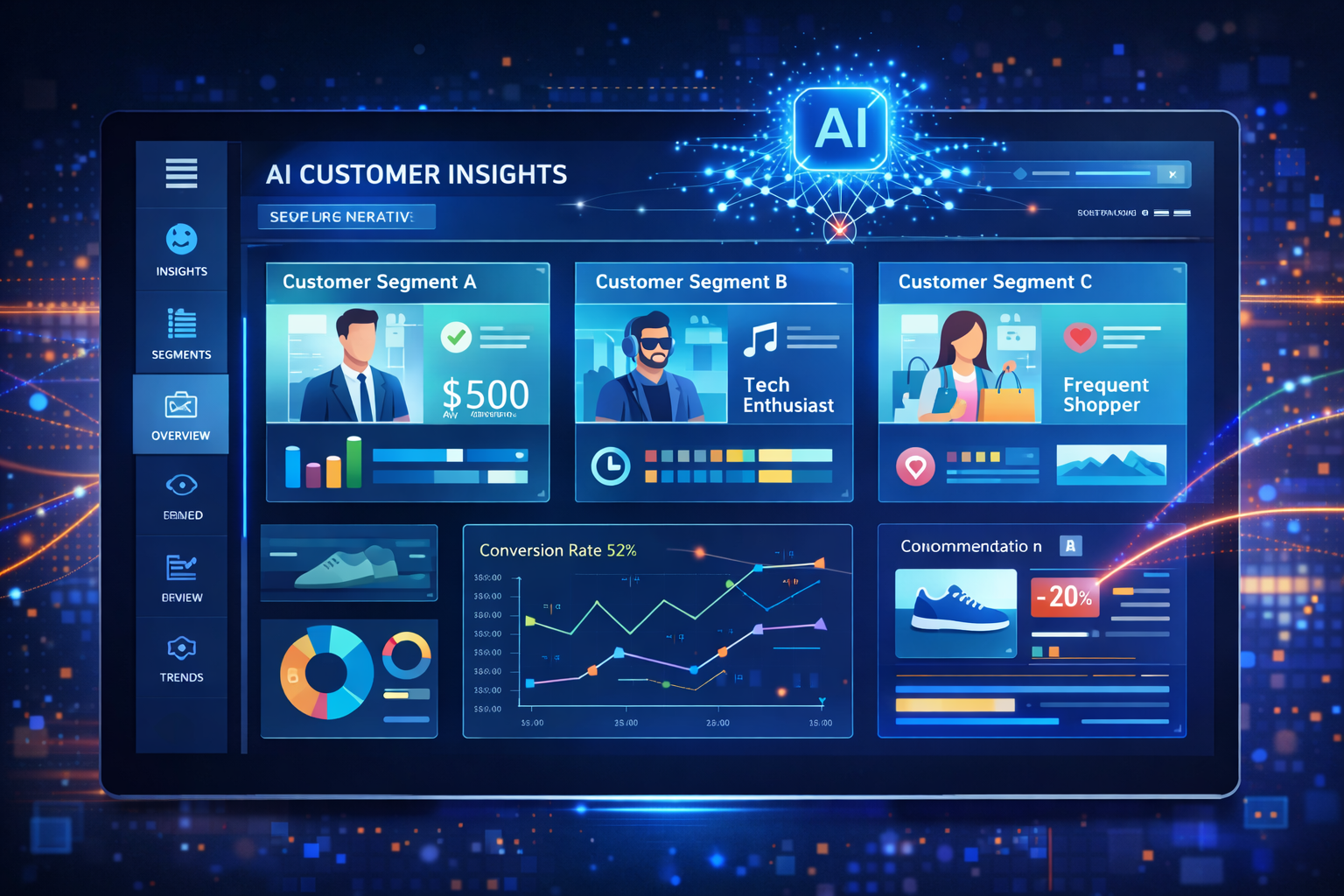
- SaaS platforms: Dashboards that automatically surface the most relevant insights for each user
- Healthcare: Diagnostic and predictive tools that analyze patient data to support clinical decisions
- E-commerce: Recommendation engines that personalize product suggestions based on browsing and purchase history
- Customer support: Intelligent chatbots that understand context and handle complex queries without human intervention
- Finance: Fraud detection systems that identify unusual patterns in real time
These examples show that AI-First development is not a theoretical concept. It is already delivering measurable results for businesses and users alike.
Why Businesses and Developers Should Pay Attention
The business case for AI-First software is strong. Development teams can reduce the amount of manual coding required, which speeds up the overall build process. Maintenance costs drop because the system handles many updates on its own. And because the software keeps learning, it stays relevant even as user behavior evolves.
For users, the experience becomes more personalized and efficient. The software feels less like a tool and more like an assistant that understands their needs.
Importantly, AI-First development does not replace developers. It changes what they focus on. Instead of writing repetitive logic, developers spend more time on architecture, data strategy, and guiding the intelligence of the system.
As user expectations continue to rise and competition across industries intensifies, companies that adopt AI-First principles early will have a clear advantage in building products that are faster, smarter, and more scalable.
AI-First software represents a genuine shift in how applications are designed and built. By placing intelligence at the center of development rather than treating it as an afterthought, teams can create systems that grow smarter with every interaction. For developers, businesses, and users, this approach offers a more efficient, adaptive, and future-ready path forward.
Frequently Asked Questions
AI-First software development is an approach where artificial intelligence forms the core foundation of an application from the beginning. Instead of writing fixed rules, developers train the system to learn from data, recognize patterns, and make decisions automatically.
Traditional software follows fixed instructions written by developers and requires manual updates. AI-First software learns from data, adapts automatically, and focuses on outcomes rather than just features. It is more flexible and stays relevant as user behavior changes.
AI-First software is being used across many industries including healthcare for predictive diagnostics, e-commerce for personalized recommendations, SaaS platforms for intelligent dashboards, customer support for smart chatbots, and finance for real-time fraud detection.