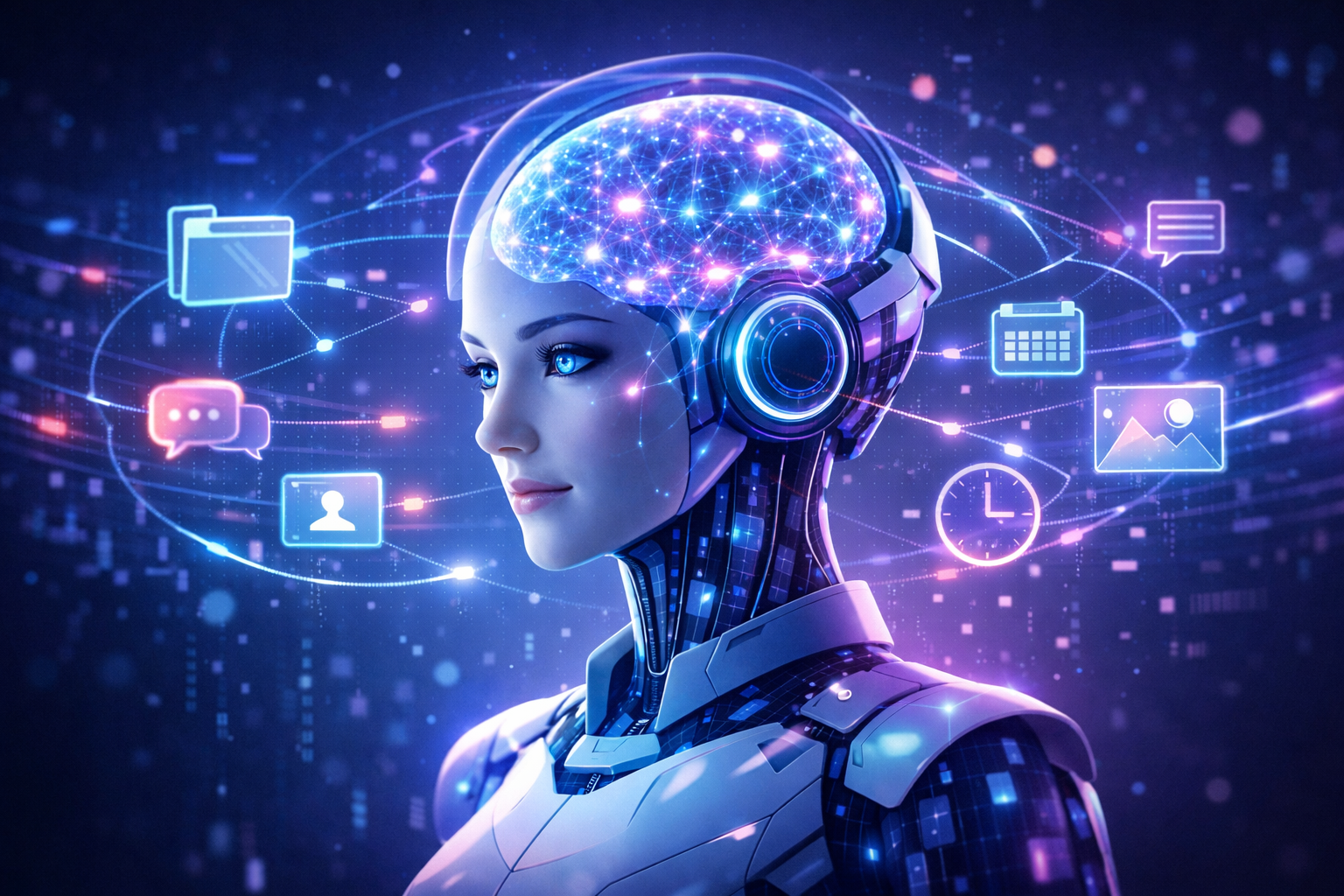
AI assistants have come a long way from simply answering one question at a time. Today, thanks to long-term memory systems, they can remember your preferences, recall past conversations, and respond in ways that feel genuinely personal. This shift is quietly changing how people interact with technology every day.
What Is an AI Memory System?
An AI memory system allows an AI assistant to store and retrieve useful information from past interactions. Think of it like human memory — just as people remember experiences and apply them later, AI can now do something similar.
There are two main types of memory in AI systems:
- Short-term memory: Holds information only within a single conversation. Once the chat ends, the data is gone.
- Long-term memory: Stores important information across multiple sessions, allowing the AI to recall it in future conversations.
Long-term memory is what makes an AI assistant feel less like a search engine and more like a helpful colleague who actually knows you.
Why Long-Term Memory Matters for AI Assistants
Without a memory system, users have to repeat the same background information every single time they start a new conversation. That gets frustrating quickly. Long-term memory solves this problem by allowing AI assistants to remember:
- Your personal preferences and communication style
- Your work habits and professional context
- Questions and topics you have explored before
This makes the AI faster to respond, more accurate in its answers, and far more useful in day-to-day tasks. The experience shifts from generic to genuinely helpful.
How Long-Term Memory Works Inside an AI System
When you interact with a memory-enabled AI, the system does not just process your current question in isolation. It actively searches its stored memory, finds relevant past information, and uses that context to shape a better response.
The process works roughly like this:
- The AI identifies key information worth saving during a conversation.
- That information gets stored in a structured memory database.
- When a new query comes in, the AI retrieves related stored data.
- It combines past context with the current question to deliver a more relevant answer.
Less important or outdated information is typically filtered out, keeping the memory clean and useful rather than cluttered.
Real-World Applications of AI Memory Technology
AI memory systems are already being used across several industries, improving outcomes for both businesses and individuals.
- Customer Service: AI agents remember previous complaints and interactions, helping resolve issues faster without making customers repeat themselves.
- Online Shopping: Platforms use memory to recommend products based on your browsing history and past purchases, making suggestions more relevant.
- Education: AI tutors can track a student’s learning progress over time and adjust lessons to match their current level.
- Healthcare: AI tools can maintain patient history records and assist doctors with context-aware suggestions during consultations.
| Feature | Traditional AI | AI with Long-Term Memory |
|---|---|---|
| Remembers past conversations | No | Yes |
| Personalised responses | Limited | High |
| Learns and improves over time | No | Yes |
| Overall user experience | Average | Excellent |
Key Challenges and Privacy Concerns
While long-term memory makes AI more powerful, it also raises some important concerns that developers and users need to take seriously.
- User privacy: Storing personal data over time creates risks if that data is mishandled or accessed without consent.
- Outdated information: Memories that are no longer accurate can lead to wrong or misleading responses.
- Responsible use: There needs to be clear control over what gets stored, for how long, and who can access it.
Most modern AI platforms address these concerns by offering privacy controls, letting users view, edit, or delete stored memories. Transparency and user consent are becoming standard expectations in this space.
What the Future Looks Like for Memory-Enabled AI
As memory technology in AI continues to mature, assistants are expected to become true digital companions — aware of your long-term goals, daily routines, and professional needs. This could make them genuinely useful not just for answering questions, but for helping people plan, decide, and grow over time.
The gap between a basic chatbot and a smart personal assistant is closing fast, and long-term memory is one of the biggest reasons why.
AI memory systems represent a meaningful step forward in making artificial intelligence more human-like in its usefulness. By remembering, learning, and adapting over time, memory-enabled AI assistants are set to become an important part of both personal and professional life. As the technology grows, so will the responsibility to use it wisely.
Frequently Asked Questions
Short-term memory in AI holds information only for the duration of a single conversation and is lost once the session ends. Long-term memory stores important information across multiple sessions, allowing the AI to recall it in future interactions and provide more personalised responses.
Most modern AI platforms include privacy controls that let users view, edit, or delete stored memories. However, it is important to review the privacy settings of any AI tool you use and understand what data is being stored and how it is protected.
Several leading AI assistants and platforms have introduced or are developing long-term memory features. These systems are designed to remember user preferences and past conversations to improve the quality and relevance of future responses over time.