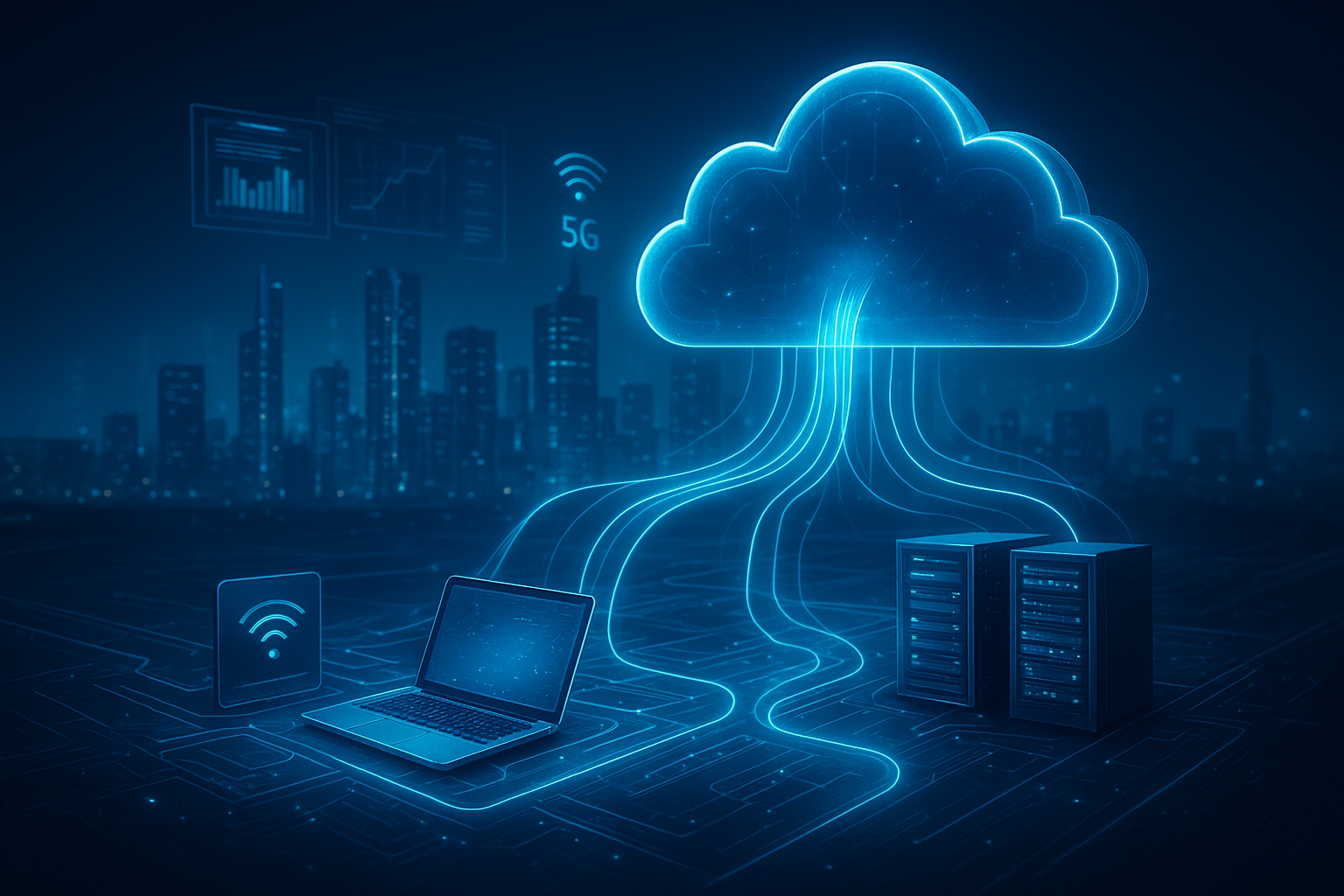
As connected devices multiply across industries, businesses need smarter ways to handle data — faster, cheaper, and more securely. Edge-to-cloud software architecture is emerging as one of the most practical answers to this challenge. By combining local data processing with the power of remote cloud platforms, this approach is reshaping how modern software systems are built and operated.
What Is Edge-to-Cloud Architecture?
Edge-to-cloud architecture is a computing model that combines both edge computing and cloud computing within a single system.
In edge computing, data is processed close to where it is generated — on a mobile device, an IoT sensor, or a local server. In cloud computing, data is sent to and processed on remote servers hosted by platforms like AWS, Google Cloud, or Microsoft Azure.
When these two approaches work together, businesses get the best of both worlds. Time-sensitive data is handled instantly at the edge, while larger datasets are sent to the cloud for storage, deeper analysis, and model training.
The result is a system that is faster, more reliable, and better equipped to handle real-world demands.
How Edge-to-Cloud Systems Actually Work
The process follows a clear flow:
- Data generation: Devices like factory sensors, smart cameras, or wearables continuously produce data.
- Edge processing: The local device or edge server makes immediate decisions — such as detecting a machine fault or triggering a health alert — without waiting for cloud communication.
- Cloud analysis: A summarised or filtered version of the data is sent to the cloud for long-term storage, trend analysis, or training AI models.
- Cloud feedback: The cloud can send updated instructions or improved models back to the edge, making future decisions smarter.
In simple terms, the edge handles speed and the cloud handles power. Together, they form a highly efficient and intelligent system.
Key Benefits for Businesses in 2025
With nearly every device becoming internet-connected, the demand for faster and more secure data processing has never been higher. Edge-to-cloud architecture addresses this in several important ways:
- Speed: Decisions are made locally in real time, without waiting for a round trip to the cloud.
- Cost savings: Only essential data is sent to the cloud, which significantly reduces bandwidth and storage costs.
- Better security: Sensitive data can stay within the local environment, reducing exposure to external threats.
- Scalability: The cloud handles large-scale storage and analytics needs as the business grows.
- AI readiness: Edge devices can run AI inference tasks locally, while the cloud continuously updates and improves the underlying models.
| Feature | Edge Computing | Cloud Computing | Edge-to-Cloud |
|---|---|---|---|
| Processing Speed | Very Fast | Moderate | Fast + Scalable |
| Storage Capacity | Limited | Very High | Balanced |
| Security Control | High (local) | Depends on provider | High (hybrid) |
| AI Capability | Limited | Very High | High (combined) |
Real-World Use Cases Across Industries
Edge-to-cloud architecture is already being used across a wide range of sectors:
- Healthcare: Wearable health monitors track patients in real time and send instant alerts during emergencies. The full data is later analysed in the cloud to generate medical insights.
- Manufacturing: Factory machines use local sensors to detect faults immediately, while the cloud analyses overall production performance and predicts maintenance needs.
- Retail: In-store edge cameras track customer movement and behaviour. This data feeds into cloud-based systems that help build targeted marketing strategies.
- Transportation: Autonomous vehicles rely on edge processing for real-time navigation decisions, while cloud services handle map updates and route learning.
- Smart Cities: Traffic signals, waste management systems, and environmental sensors operate locally, while city-wide data is stored and analysed in the cloud for urban planning.
Challenges and How the Industry Is Addressing Them
Despite its clear advantages, edge-to-cloud architecture does come with challenges that organisations need to plan for:
- Managing both edge and cloud systems simultaneously adds operational complexity.
- Security must be maintained at both ends — local devices and remote cloud environments.
- Keeping data synchronised and up to date between edge and cloud requires careful architecture planning.
However, modern tools are making this easier. Technologies like Kubernetes and Docker help manage distributed workloads, while 5G networks are dramatically improving the speed and reliability of edge-to-cloud communication. As these tools mature, the barriers to adoption are steadily coming down.
What the Future Looks Like
Edge-to-cloud is expected to become the default infrastructure model for most industries within the next few years. From smart homes and self-driving cars to AI-powered factories and connected hospitals, this architecture will sit at the core of digital operations.
As data volumes continue to grow, businesses that adopt this model early will be better positioned to make faster decisions, serve customers more effectively, and stay ahead of competitors who are still relying on traditional cloud-only setups.
In conclusion, the future of software is not just in the cloud — it is at the edge too. Businesses that process data locally and use the cloud for deeper intelligence will gain a real advantage in speed, security, and efficiency. Adopting edge-to-cloud software architecture is quickly becoming a defining step in any serious digital transformation strategy for 2025 and beyond.
Frequently Asked Questions
Edge computing processes data locally on or near the device that generates it, enabling faster real-time decisions. Cloud computing processes and stores data on remote servers, offering greater storage capacity and analytical power. Edge-to-cloud architecture combines both to get the benefits of speed and scale.
Industries such as healthcare, manufacturing, retail, transportation, and smart city management benefit significantly. These sectors require both real-time local processing and large-scale cloud analysis, making edge-to-cloud a practical fit.
Tools like Kubernetes and Docker are widely used to manage and deploy workloads across distributed edge and cloud environments. 5G networks also play a key role in enabling fast and reliable communication between edge devices and cloud platforms.