Google search results have changed dramatically. Millions of users now get their answers directly on the search page without clicking a single link. This shift — known as zero-click or no-click search — is reshaping how websites attract visitors and how brands build visibility online. Understanding this trend is no longer optional for anyone serious about SEO.
What Are Zero-Click Searches?
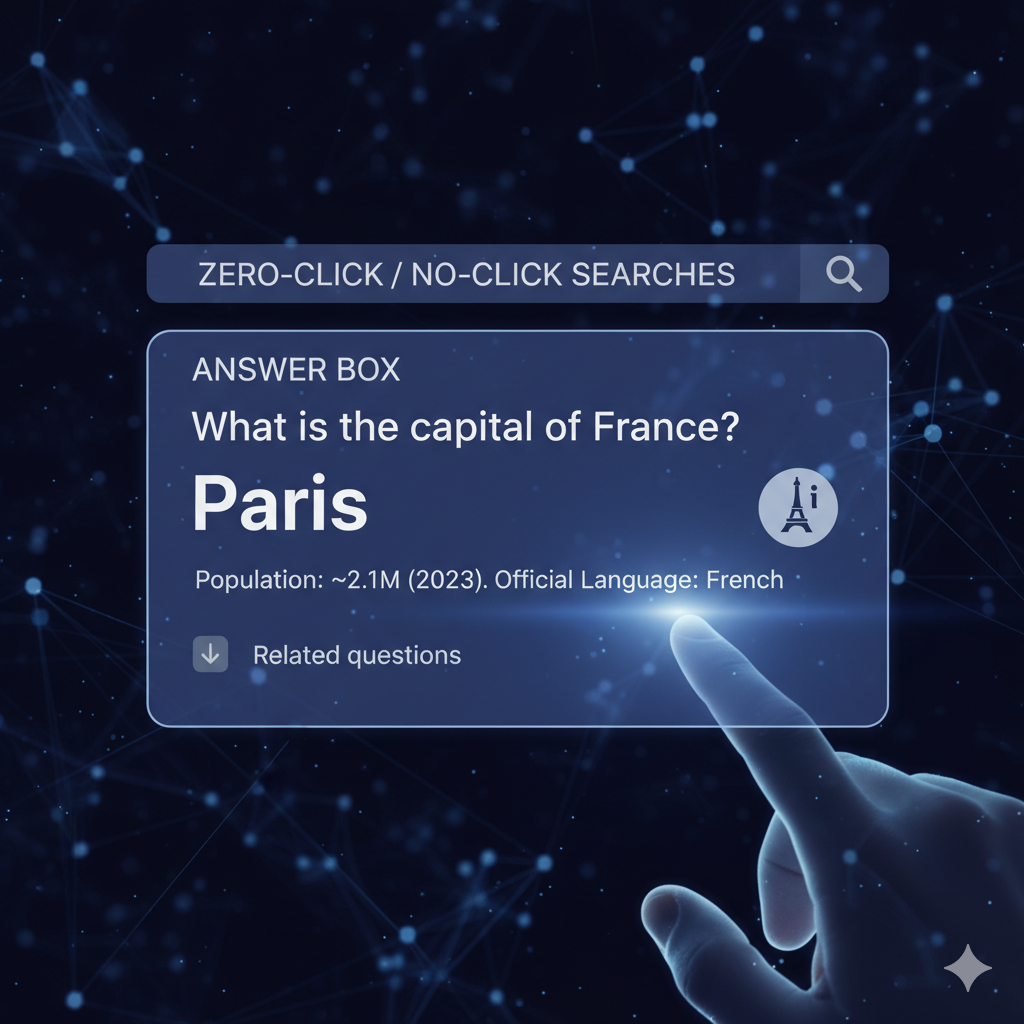
A zero-click search happens when Google displays the answer to a user’s query directly on the search results page, removing the need to visit any website. For example, if you search “Bitcoin price today”, Google shows a live price chart at the very top. You get what you need without clicking anywhere.
These results appear in several formats:
- Featured snippets — answer boxes that appear above all other results
- People Also Ask sections — expandable questions related to your search
- Knowledge panels — information cards about people, brands, or places
- AI Overviews — Google’s AI-generated summaries combining details from multiple sources
- Quick tools — built-in calculators, weather widgets, currency converters, and more
Each of these formats gives users instant answers, which means fewer clicks reach individual websites.
Why Zero-Click Searches Matter for SEO
The most obvious impact is reduced website traffic. When users find answers without clicking, your site misses out on a visit. Studies have consistently shown that a significant portion of Google searches end without any click to an external website.
However, the picture is not entirely negative. When Google pulls your content into a featured snippet or an AI Overview, your brand name appears prominently at the top of the results page. This creates strong brand awareness even without a direct visit — think of it as free, high-visibility advertising space on Google.
The key is to shift your mindset from chasing clicks alone to building visibility and trust on the search results page itself.
| Zero-Click Format | What It Shows | SEO Benefit |
|---|---|---|
| Featured Snippet | Direct answer from a webpage | High brand visibility, position zero |
| People Also Ask | Related questions and answers | Broader topic authority |
| Knowledge Panel | Entity information card | Brand credibility boost |
| AI Overview | AI-generated multi-source summary | Trust signal if your site is cited |
How Google Selects Content for Answer Boxes
Google uses advanced algorithms to identify clear, accurate, and well-structured information from top-ranking pages. It does not pick content randomly. There are specific signals Google looks for:
- Brief, direct answers that address the query immediately
- Well-structured content using proper headings and bullet points
- Structured data markup such as FAQ schema, HowTo schema, or Organization schema
- Websites with strong credibility, expertise, and consistent publishing history
If your content answers a question clearly and is easy to read, Google is more likely to feature it in an answer box or include it in an AI Overview.
Practical Ways to Optimise Your Content for Zero-Click Results
You can take specific steps to improve your chances of appearing in these high-visibility positions:
- Start with a direct answer: Open each section or blog post with a concise, clear response to the main question. For example: “Blockchain is a digital system that records transactions across multiple computers.”
- Use clean formatting: Structure your content with proper H2 and H3 headings, short paragraphs, and bullet lists. Google strongly favours well-organised, easy-to-read pages.
- Add schema markup: Implement FAQ, HowTo, or Organization schema on your website. This helps Google understand your content’s context and increases its chances of appearing in rich results.
- Match search intent: Understand what users actually want when they type a query. Informational queries like “What is blockchain?” need detailed guides. Transactional queries like “Buy Bitcoin” need clear calls to action. Navigational queries like “Coinbase login” need direct guidance.
- Target long-tail, question-based keywords: Phrases like “How do featured snippets work?” or “What are zero-click searches?” are more likely to trigger answer boxes than short, broad keywords.
Google AI Overviews and the Changing SEO Landscape in 2025
Google’s AI Overviews represent the next stage of zero-click search. Instead of pulling content from a single page, AI Overviews blend information from multiple websites into one summarised answer shown at the top of the results page.
This creates tougher competition for traditional organic rankings. But it also opens a new opportunity — if Google’s AI cites or references your website within an Overview, it signals strong trust and authority to millions of users.
To position your site for AI Overview inclusion, focus on:
- Publishing accurate, well-researched content that is regularly updated
- Writing explanations that are clear and easy for general readers to understand
- Building topical authority by consistently covering your subject area in depth
- Earning quality backlinks that reinforce your site’s credibility
The brands that invest in genuine expertise and clear communication will be best placed to benefit from AI-driven search results.
Zero-click searches are not the end of SEO — they are a shift in how SEO value is measured. Visibility, brand recognition, and authority on the search results page are now just as important as the number of clicks you receive. Adapting your content strategy to this reality is the smartest move any website owner or digital marketer can make right now.
Frequently Asked Questions
A zero-click search is when a user finds the answer to their query directly on Google's search results page without clicking through to any website. This happens through featured snippets, AI Overviews, knowledge panels, People Also Ask boxes, and built-in tools like calculators or weather widgets.
Zero-click searches can reduce direct website traffic since users get answers without visiting your site. However, if your content appears in a featured snippet or AI Overview, your brand still gains strong visibility and credibility on the search results page, which can support long-term brand recognition and trust.
To improve your chances of appearing in Google answer boxes, write clear and direct answers at the start of your content, use proper headings and bullet points, add FAQ or HowTo schema markup, target question-based long-tail keywords, and build your site's overall authority through consistent, accurate, and well-researched content.