
Artificial Intelligence is no longer a distant concept for engineers — it is actively reshaping how they design, build, test, and maintain complex systems. From predicting equipment failures before they happen to creating energy-efficient buildings, AI is helping engineers work faster, smarter, and with greater precision than ever before.
Predictive Maintenance: Fixing Problems Before They Occur
One of the most practical uses of AI in engineering is predictive maintenance. Instead of waiting for a machine to break down, AI continuously monitors equipment data and flags potential issues before they become costly failures.
This approach saves both time and money. Factory engineers, for example, receive early warnings about machine wear and can schedule repairs during planned downtime rather than dealing with unexpected shutdowns. The result is less waste, fewer accidents, and smoother operations across industrial facilities.
Generative Design: Letting AI Explore Thousands of Possibilities
Traditional product design requires engineers to manually test and refine each concept — a process that can take weeks or months. With generative design, engineers simply define their requirements, such as weight limits, material constraints, or structural strength, and AI generates hundreds or even thousands of design options within minutes.
This approach is already being used in the aerospace and automotive industries, where manufacturers need parts that are both lightweight and structurally strong. AI-generated designs often outperform human-created ones because the system can explore combinations that a human designer might never consider.
Digital Twins: Testing the Real World in a Virtual Space
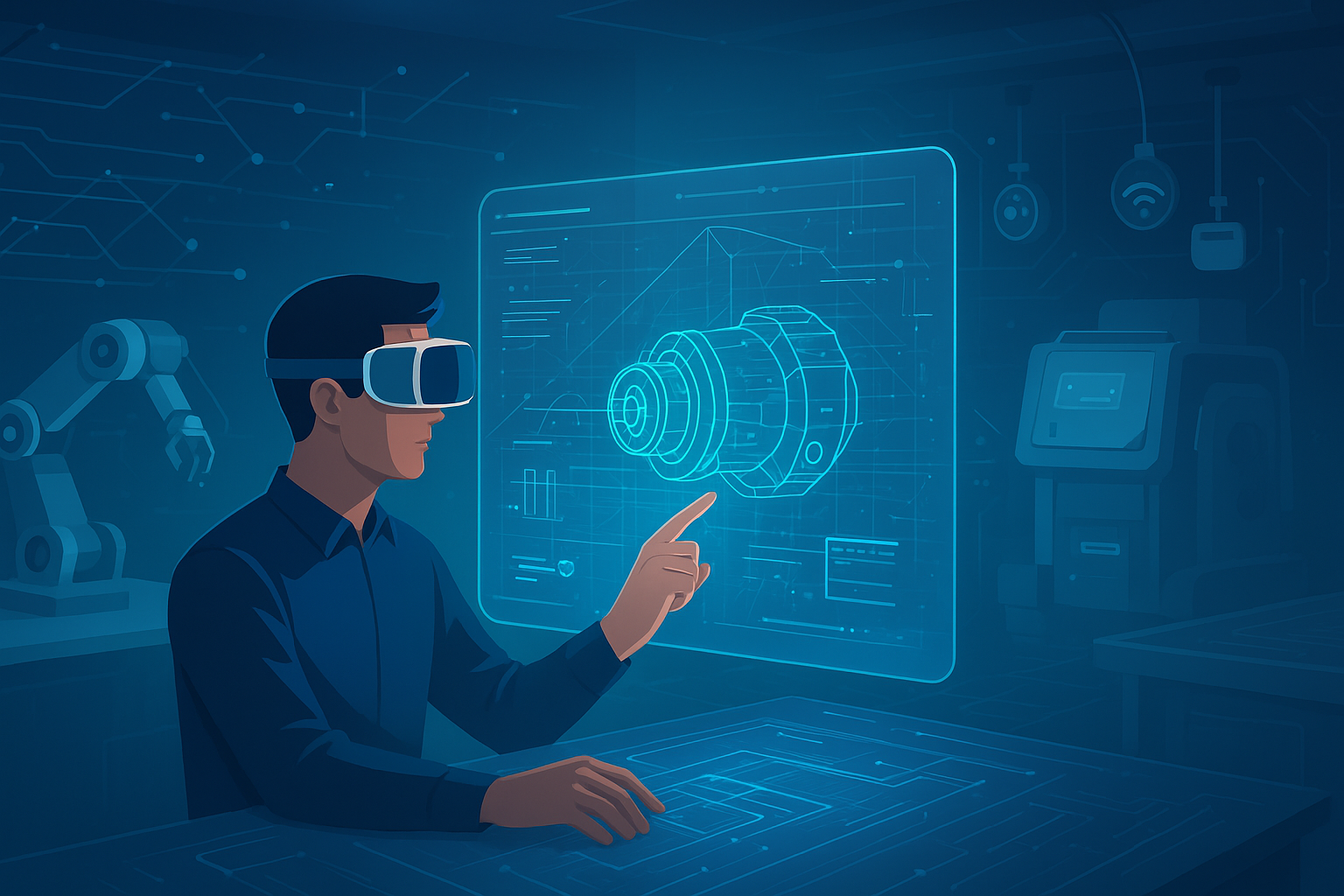
A digital twin is a virtual replica of a physical object, system, or environment. Engineers use AI-powered digital twins to simulate how a product or infrastructure will behave under real-world conditions — without building a single physical prototype.
This technology is proving especially valuable in urban planning. Cities are using digital twins to manage traffic flow, monitor power grids, and optimise water distribution systems. Engineers can test changes virtually, identify risks, and implement solutions with far greater confidence before committing resources on the ground.
Smart Automation and AI-Powered Robotics
AI has taken industrial automation well beyond simple pre-programmed robots. Today’s smart automation systems can self-adjust in real time, reduce errors, and complete complex assembly tasks with high precision.
AI-powered robotic arms, for instance, can handle components of varying shapes and sizes without requiring manual reprogramming for each new task. This flexibility makes them far more efficient on modern production lines where product variety is high and speed is critical.
Key benefits of smart automation in engineering include:
- Higher output quality with fewer defects
- Reduced labour costs on repetitive or hazardous tasks
- Faster production cycles with consistent results
- Greater adaptability to changing manufacturing requirements
Sustainable Engineering: Building a Greener Future with AI
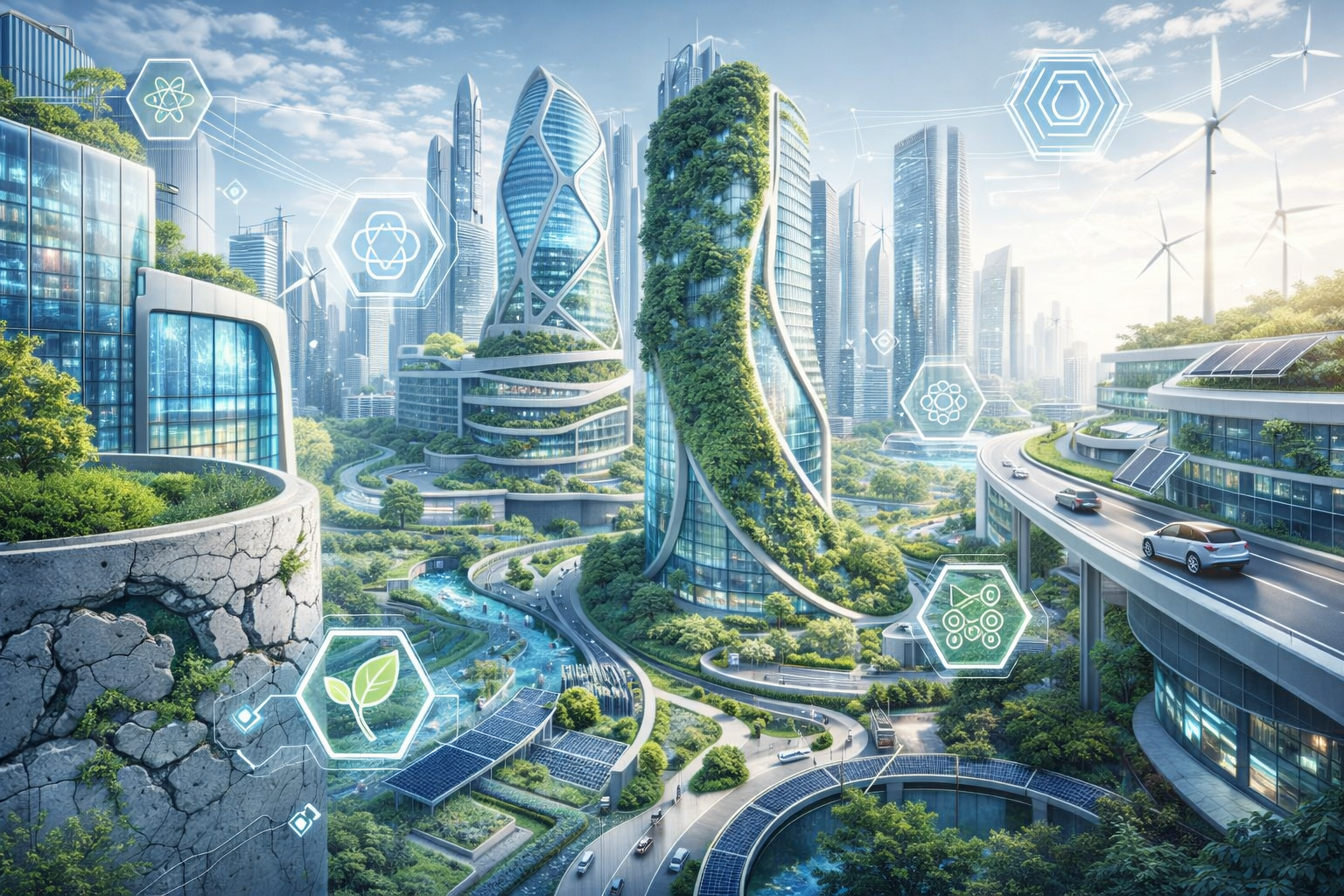
Engineers are increasingly turning to AI to design buildings, machines, and infrastructure that consume less energy and generate less waste. Sustainable engineering powered by AI is helping civil and structural engineers create structures that naturally regulate temperature — staying cool in summer and warm in winter — significantly cutting down on electricity consumption.
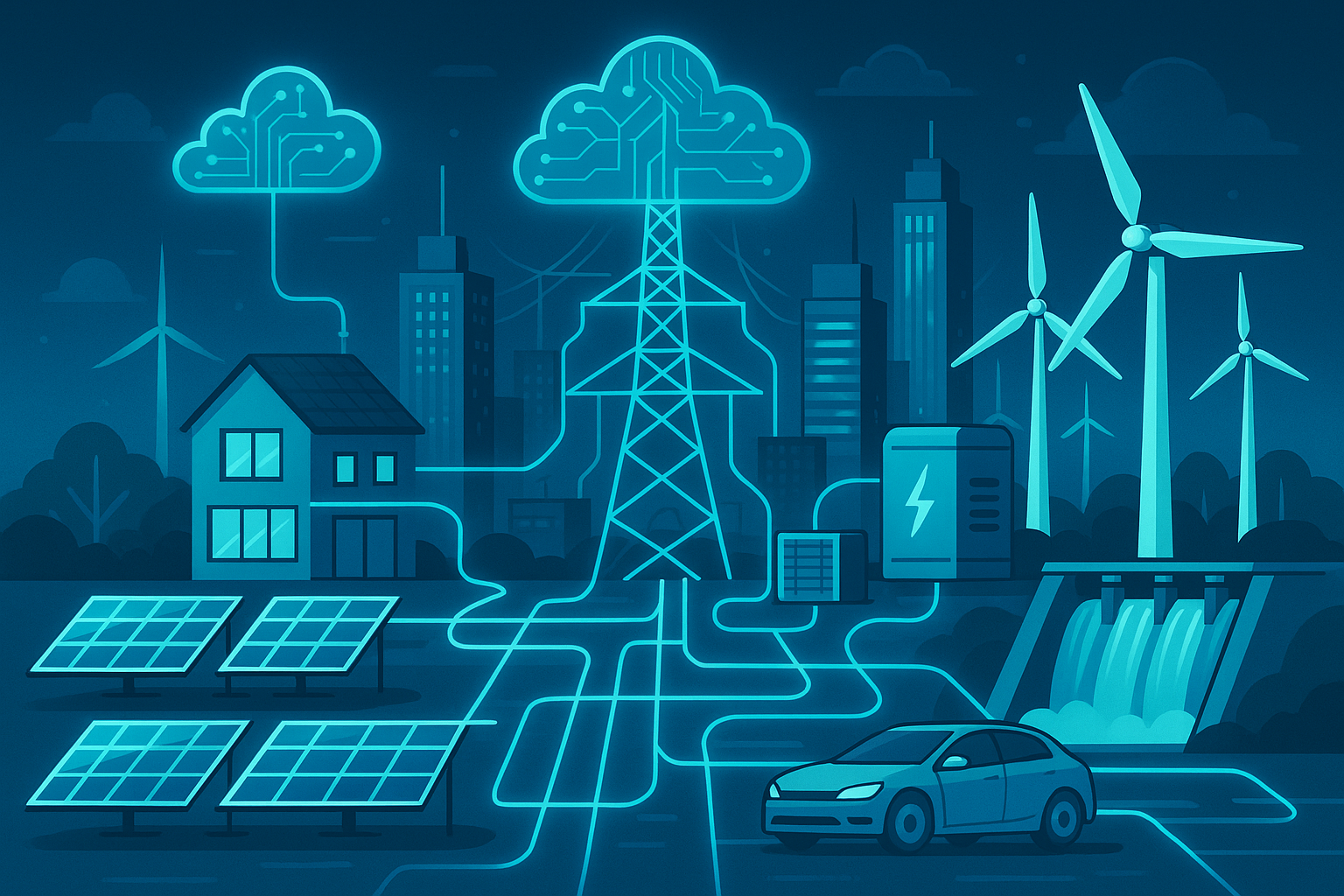
Beyond buildings, AI is also being applied to optimise renewable energy systems, reduce material waste in manufacturing, and design more efficient transportation networks. These applications directly contribute to environmental goals while also lowering long-term operational costs.
| AI Application | Engineering Benefit | Real-World Example |
|---|---|---|
| Predictive Maintenance | Prevents unexpected breakdowns | Factory machine monitoring |
| Generative Design | Faster, stronger product designs | Aerospace and automotive parts |
| Digital Twins | Virtual testing without prototypes | Smart city infrastructure |
| Smart Automation | Precision and efficiency at scale | AI-powered robotic assembly lines |
| Sustainable Engineering | Lower energy use and waste | Energy-efficient building design |
What Lies Ahead for AI in Engineering
The role of AI in engineering is expected to grow significantly in the coming years. Several emerging areas are already showing strong potential:
- Quantum Engineering: AI will help design faster computers and more secure communication systems.
- Healthcare and Biotech: AI combined with biological research could lead to advanced medical devices and engineered tissue.
- Autonomous Systems: Self-driving vehicles, delivery drones, and intelligent robots are moving closer to mainstream use.
- Advanced Manufacturing: AI is expected to transform 3D printing and fully automated factory operations.
Engineers who build skills around AI tools will be better positioned to lead projects, solve complex problems, and contribute to solutions that are both technically sound and socially responsible.
AI is not replacing engineers — it is giving them a powerful partner to tackle challenges that were previously too complex, too slow, or too expensive to solve alone. The engineers who embrace this shift will be the ones shaping the next generation of infrastructure, products, and technology.
Frequently Asked Questions
AI is used in engineering for predictive maintenance, generative design, digital twin simulations, smart automation, and sustainable building design. It helps engineers work faster, reduce errors, and develop more efficient solutions.
Generative design is an AI-driven process where engineers input design requirements such as weight, size, or material constraints, and the AI system produces hundreds or thousands of optimised design options in minutes. It is widely used in aerospace and automotive manufacturing.
AI is not expected to replace engineers. Instead, it acts as a powerful tool that supports engineers by handling complex calculations, simulations, and repetitive tasks. Engineers who learn to work alongside AI will be better equipped to solve advanced problems and lead innovation.