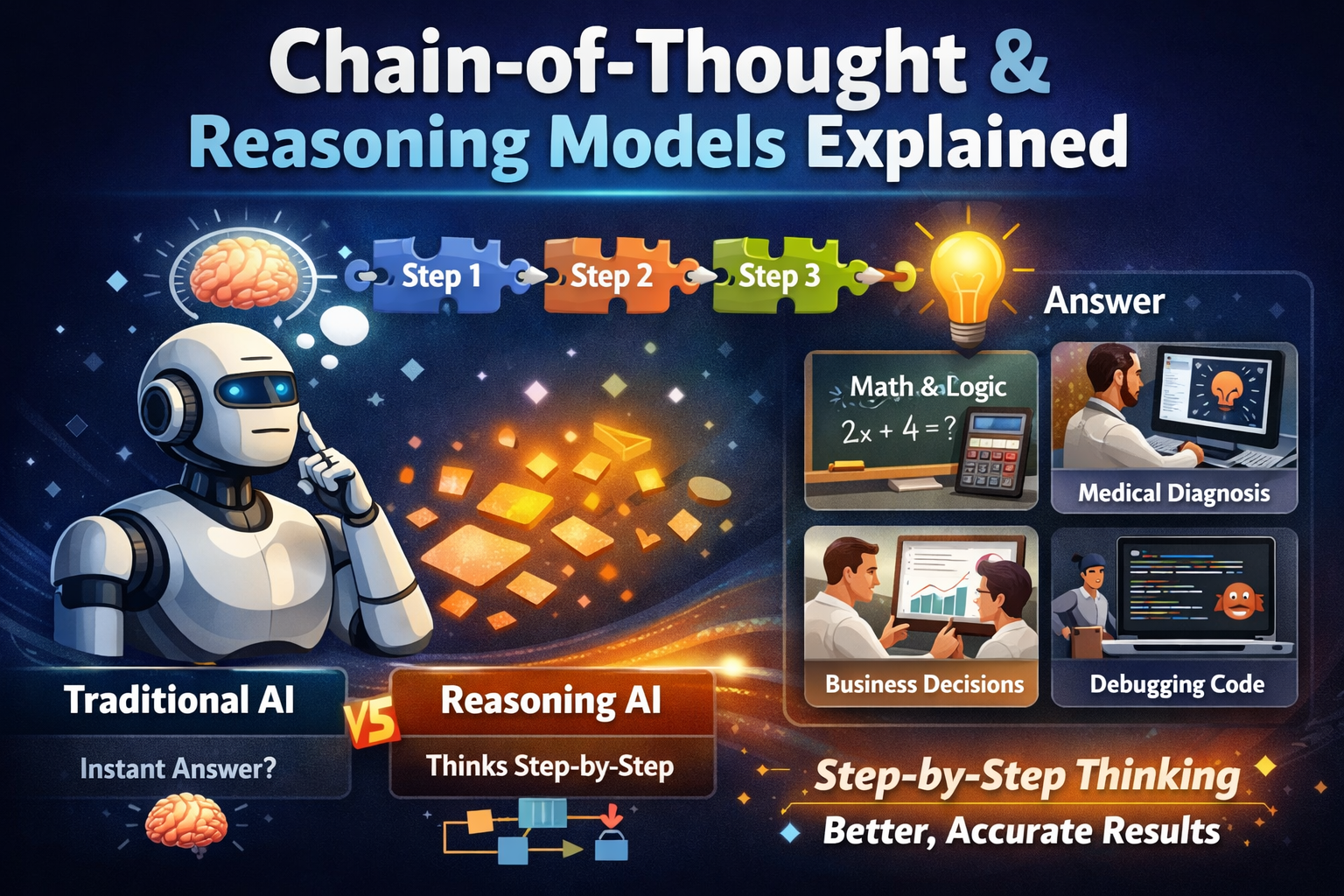

AI tools like ChatGPT can answer questions, explain ideas, and help with complex tasks. But they have one key limitation — their knowledge has a cutoff date. Retrieval-Augmented Generation (RAG) solves this problem by allowing AI to fetch real-time information before forming a response, making answers sharper, more accurate, and far more reliable.
What Is Retrieval-Augmented Generation (RAG)?
Retrieval-Augmented Generation is a technique that improves how AI systems generate answers. Instead of relying only on what the model learned during training, RAG allows the AI to search external sources — such as websites, document databases, or PDFs — and use that freshly retrieved information to build its response.
Think of it like the difference between a student answering from memory versus one who checks a reference book before responding. The second approach is more accurate, and that is exactly what RAG brings to AI.
This method combines two core capabilities: information retrieval and natural language generation. Together, they produce responses that are grounded in real, current data rather than outdated training material.
How Does RAG Work Step by Step?
The process behind RAG is straightforward once you break it down:
- Step 1 — You ask a question: The user submits a query to the AI system.
- Step 2 — The AI searches for relevant data: It looks through trusted external sources like websites, internal documents, or knowledge bases.
- Step 3 — It filters and ranks the results: The system identifies the most relevant pieces of information from what it finds.
- Step 4 — It generates a response: Using both its language skills and the retrieved data, the AI crafts a precise, well-informed answer.
This workflow makes the AI behave more like a research assistant — one that reads before it speaks, rather than guessing from old memory.
Why RAG Is Becoming Essential for AI Applications
RAG addresses some of the most common complaints about AI tools. Here is why it matters:
- Up-to-date information: RAG keeps AI current on fast-changing topics like news, health guidelines, financial markets, and legal updates.
- Fewer hallucinations: AI models sometimes generate confident but incorrect answers — a problem known as hallucination. By grounding responses in real data, RAG significantly reduces this risk.
- Industry-specific accuracy: Businesses can connect RAG to their own documents — product manuals, legal contracts, customer FAQs — so the AI answers with company-specific knowledge.
- Time savings: Users get direct, well-sourced answers without having to search multiple platforms themselves.
| Feature | Standard AI Model | RAG-Powered AI Model |
|---|---|---|
| Knowledge cutoff | Fixed training date | Real-time external sources |
| Accuracy | Can hallucinate facts | Grounded in retrieved data |
| Customisation | Limited | High — connects to custom databases |
| Use case flexibility | General purpose | Industry-specific |
Real-World Uses of RAG Across Industries
RAG is already being used across a wide range of sectors to build smarter, more reliable AI tools:
- Customer Support: Chatbots pull answers directly from product guides and FAQs, giving customers accurate help instantly.
- Healthcare: Medical AI tools access the latest clinical databases to support doctors with updated treatment insights.
- Finance: Analysts use RAG-powered tools to get real-time stock data, earnings reports, and financial news summaries.
- Legal Technology: AI systems review case law and regulatory documents before responding to legal queries.
- Education: Virtual tutors draw from current textbooks and curriculum materials to explain concepts accurately.
Popular Tools Developers Use to Build RAG Systems
For developers and tech teams looking to build RAG-powered applications, several well-established tools are available:
- LangChain: A widely used framework that connects documents and data sources to large language models like ChatGPT.
- LlamaIndex (formerly GPT Index): Helps organise and retrieve structured data for AI models efficiently.
- Haystack: Specialises in building custom question-answering and document search systems.
- OpenAI Plugins: Allow ChatGPT to browse the web or pull live data from external services.
These tools give developers the building blocks to create AI applications tailored to specific business needs — from internal knowledge bases to customer-facing assistants.
What the Future Holds for RAG in AI
As users demand more accurate and current information from AI, RAG is set to become a standard part of how intelligent systems are built. Expect to see AI assistants that automatically pull the latest company reports, research papers, or news updates before responding. Chatbots across apps and websites will become noticeably smarter. Business tools will use RAG to support real-time decision-making with live data insights.
Whether you are a business owner, a developer, or someone who uses AI tools daily, RAG represents a meaningful step forward in making artificial intelligence genuinely useful and trustworthy.
In short, RAG bridges the gap between what AI knows and what is actually happening in the world right now — and that gap matters more than most people realise.
Frequently Asked Questions
RAG is a method that allows AI systems to search for up-to-date information from external sources before generating a response. Instead of relying only on training data, the AI retrieves relevant facts first and then uses them to craft a more accurate answer.
A standard AI model answers based only on what it learned during training, which has a fixed cutoff date. A RAG-powered model actively searches external databases or documents in real time, making its answers more current and less prone to errors or hallucinations.
RAG is highly useful in healthcare, finance, legal technology, customer support, and education. In each of these fields, having access to accurate, up-to-date information is critical, and RAG enables AI tools to deliver exactly that.